Skip to content
In development · Content subject to change without notice
Field Reference · Moreton Bay · Quandamooka Country

Who's Who
on the Mudflats

The migratory and resident shorebird species a Steward needs to recognise, understand, and document. A name is just a label. What each species needs, why it is here, and what threatens it is a different body of knowledge — and that is what this program delivers.

Already Gone

Eight shorebird species are confirmed extinct. These are not future losses. They are past ones. The dates below are the last time a living individual was recorded. After that date — nothing. A different species appears each time this page is opened.

🪶
Loading…
Fewer Than 500

One species. One living population. Fewer than 500 individuals on the planet. What follows — the Critically Endangered, the Endangered, the Vulnerable — is what the road before this point looks like. This is the road's end.

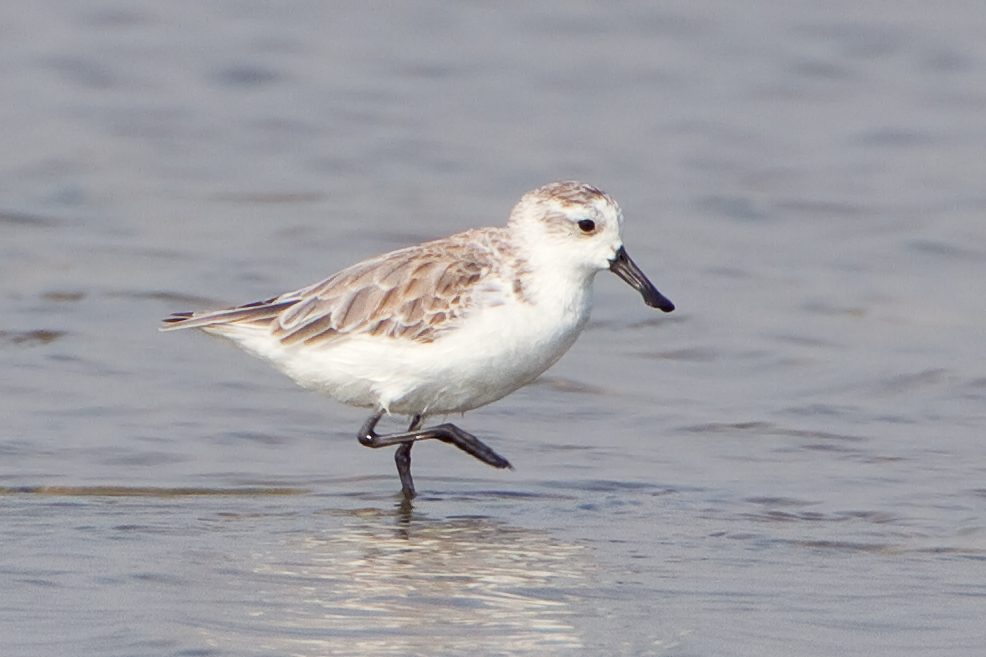
Spoon-billed Sandpiper · JJ Harrison CC BY-SA
Critically Endangered EAAF Flyway Species · ~490 adults
Spoon-billed Sandpiper
Calidris pygmaea
The spatulate bill has no equivalent in nature. Neither does the situation: fewer than 500 adults alive on Earth, a captive ark established at Slimbridge as the last insurance policy, and a flyway that has already lost one species to extinction — this year.
Read the full account →
Critically Endangered

Three species — each one dependent on habitat that is disappearing. Their presence at Moreton Bay is an opportunity and a responsibility.

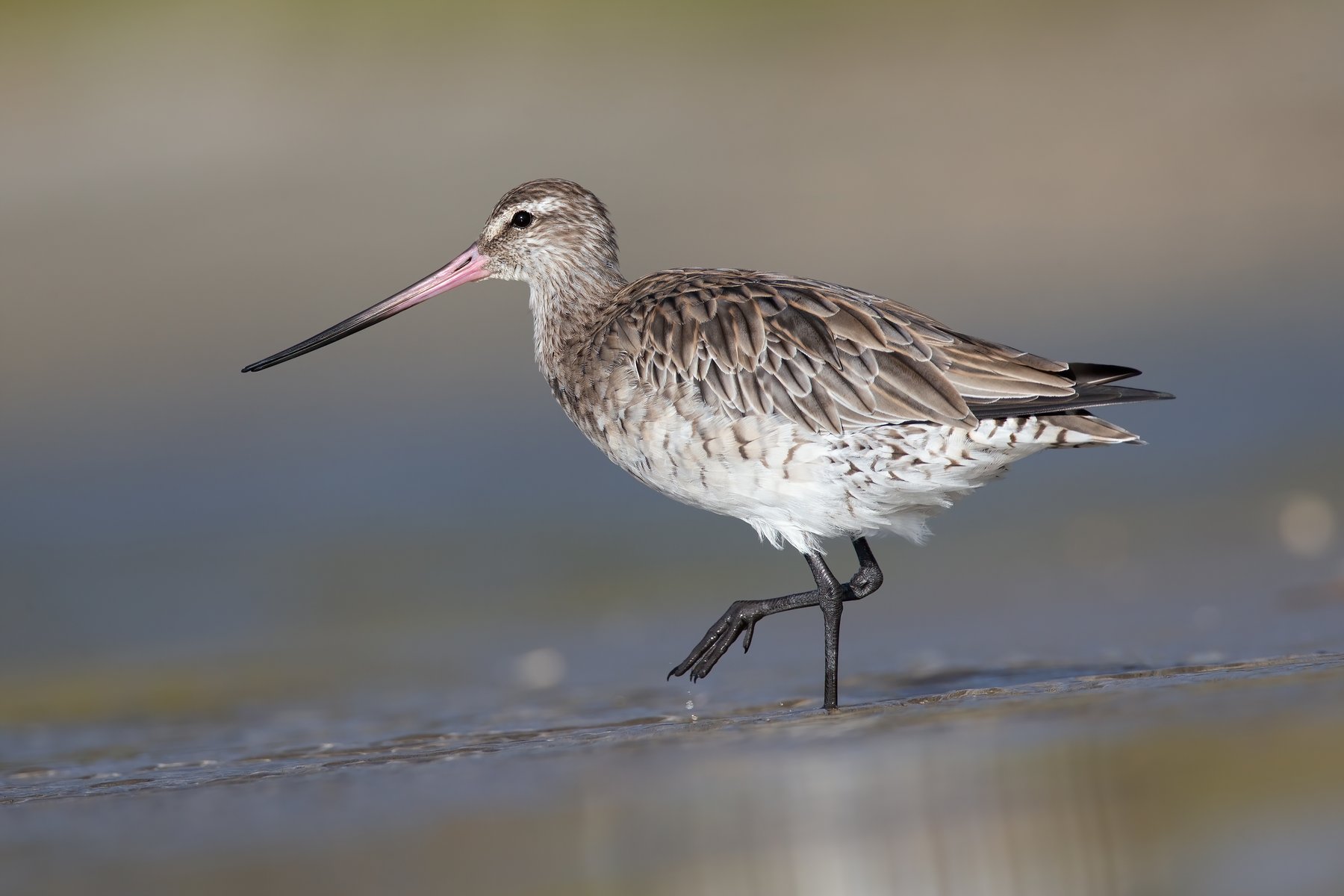
Bar-tailed Godwit
Critically Endangered
Bar-tailed Godwit
Limosa lapponica baueri
The longest non-stop migration of any animal on Earth — 13,560 km from Alaska without landing. 126,000 birds remaining.
Open threat profile →
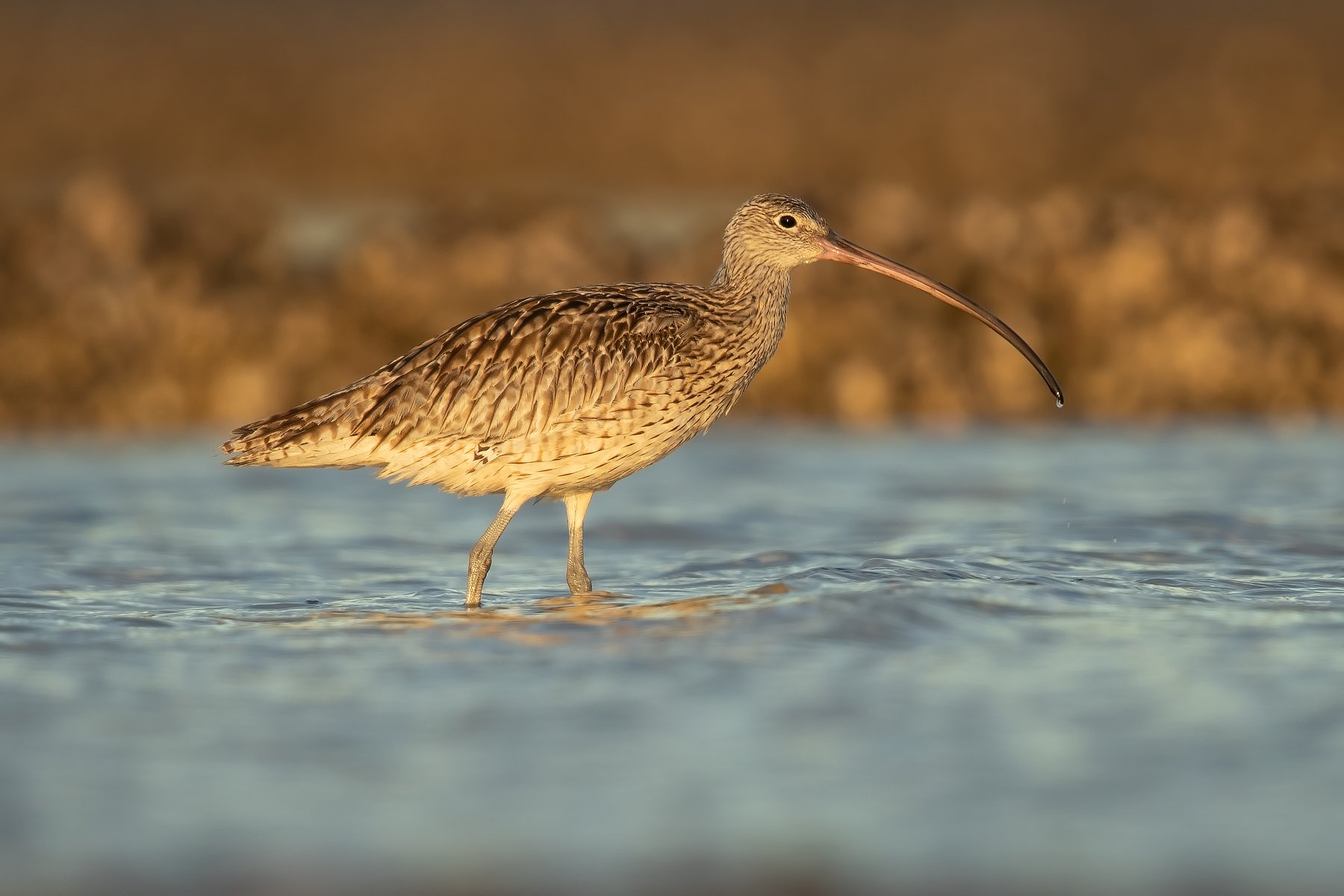
Far Eastern Curlew
Critically Endangered
Far Eastern Curlew
Numenius madagascariensis
Australia's largest migratory shorebird. Down 80% in 30 years. The most visible symbol of flyway collapse.
Open threat profile →
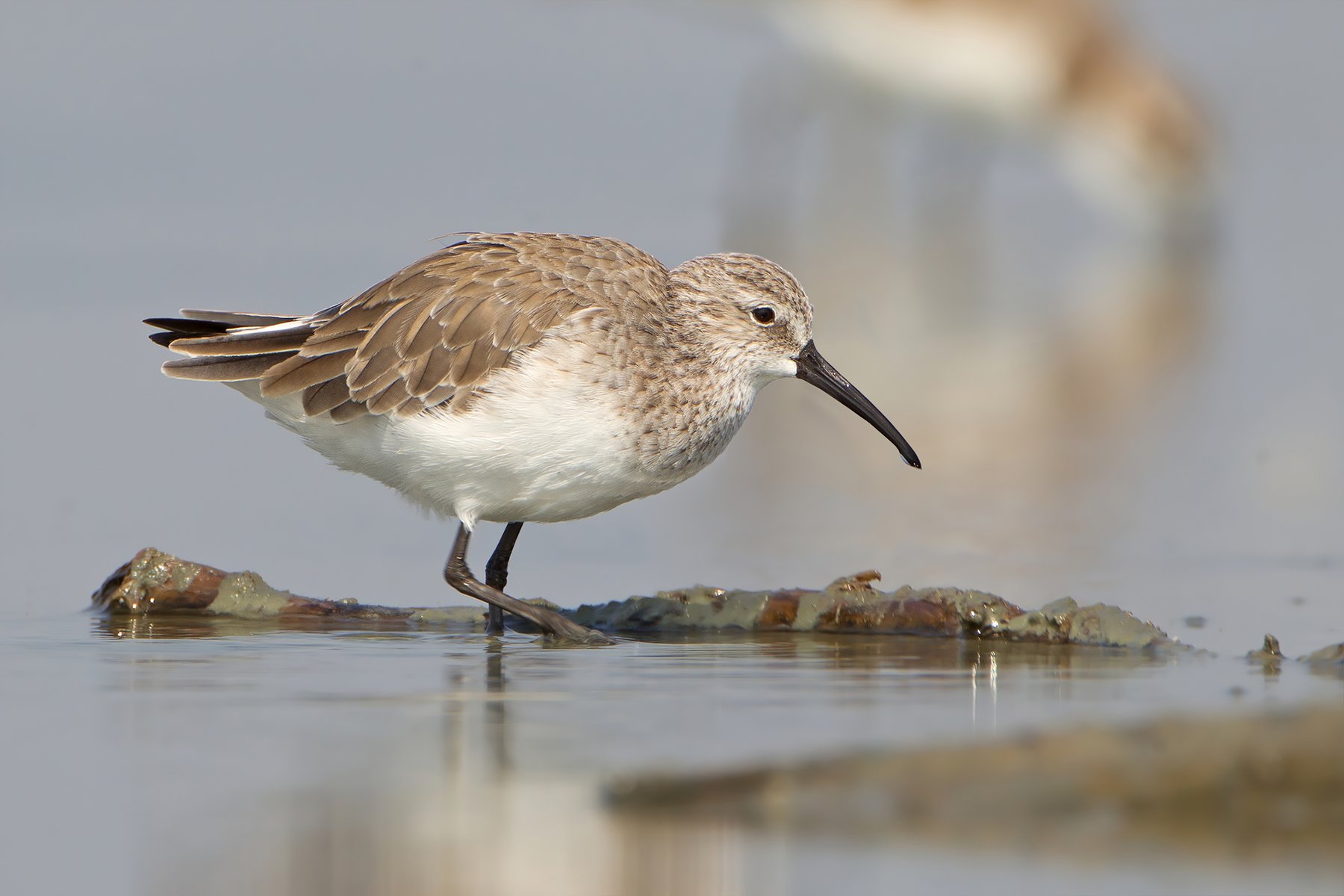
Curlew Sandpiper
Critically Endangered
Curlew Sandpiper
Calidris ferruginea
Slim, elegant, in free fall. Its entire flyway population funnels through a bottleneck that is shrinking every year.
Open threat profile →
Endangered

Three further species under serious flyway pressure. Each one requires the same field attention as the Critically Endangered species.

Great Knot
Endangered
Great Knot
Calidris tenuirostris
The largest of the knots. Feeds on bivalves in tidal flats now being buried under concrete across the Yellow Sea.
Open threat profile →
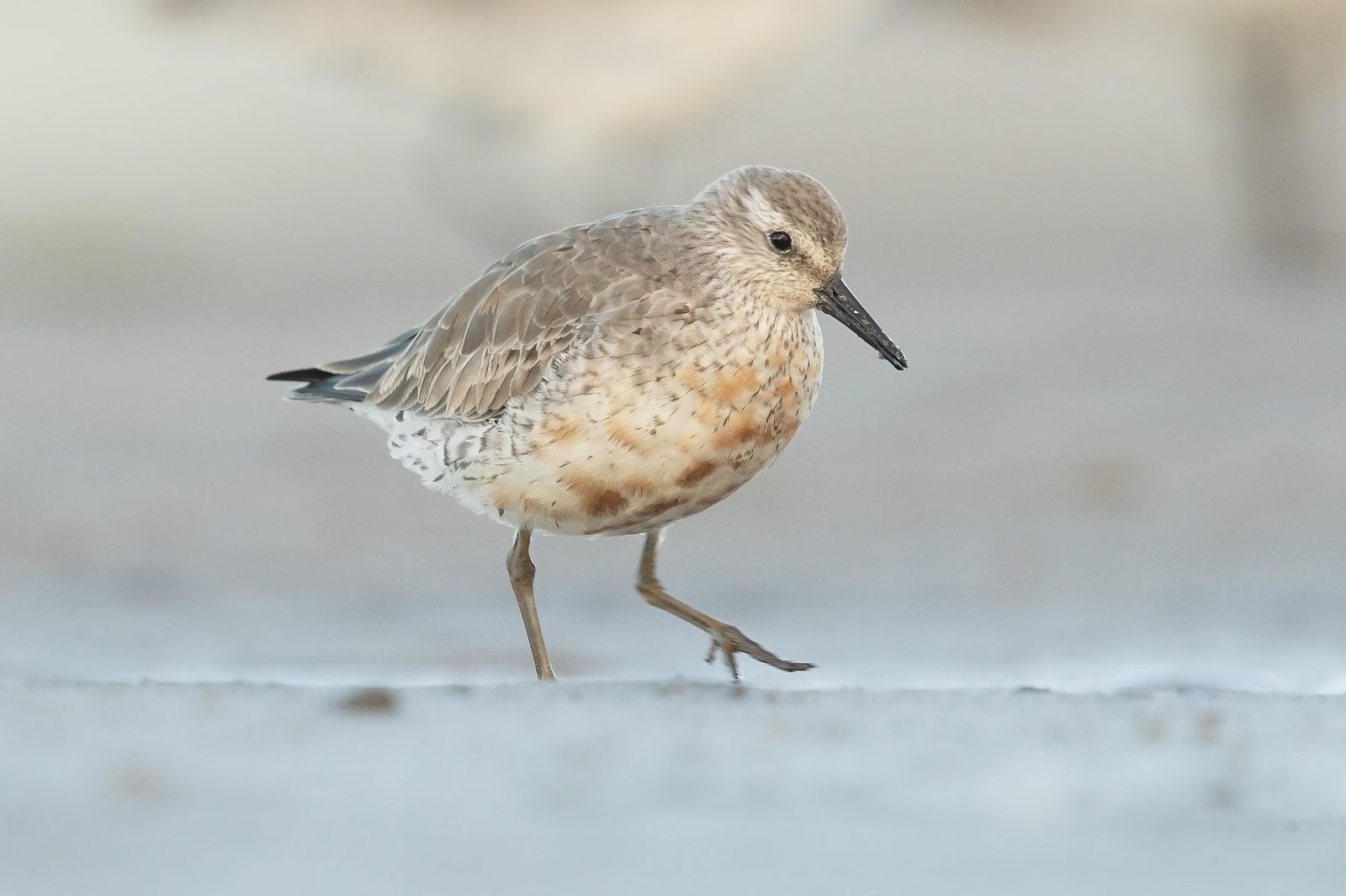
Red Knot
Endangered
Red Knot
Calidris canutus rogersi
Compact and fast-moving. Moreton Bay is formally identified critical non-breeding habitat for this subspecies.
Open threat profile →
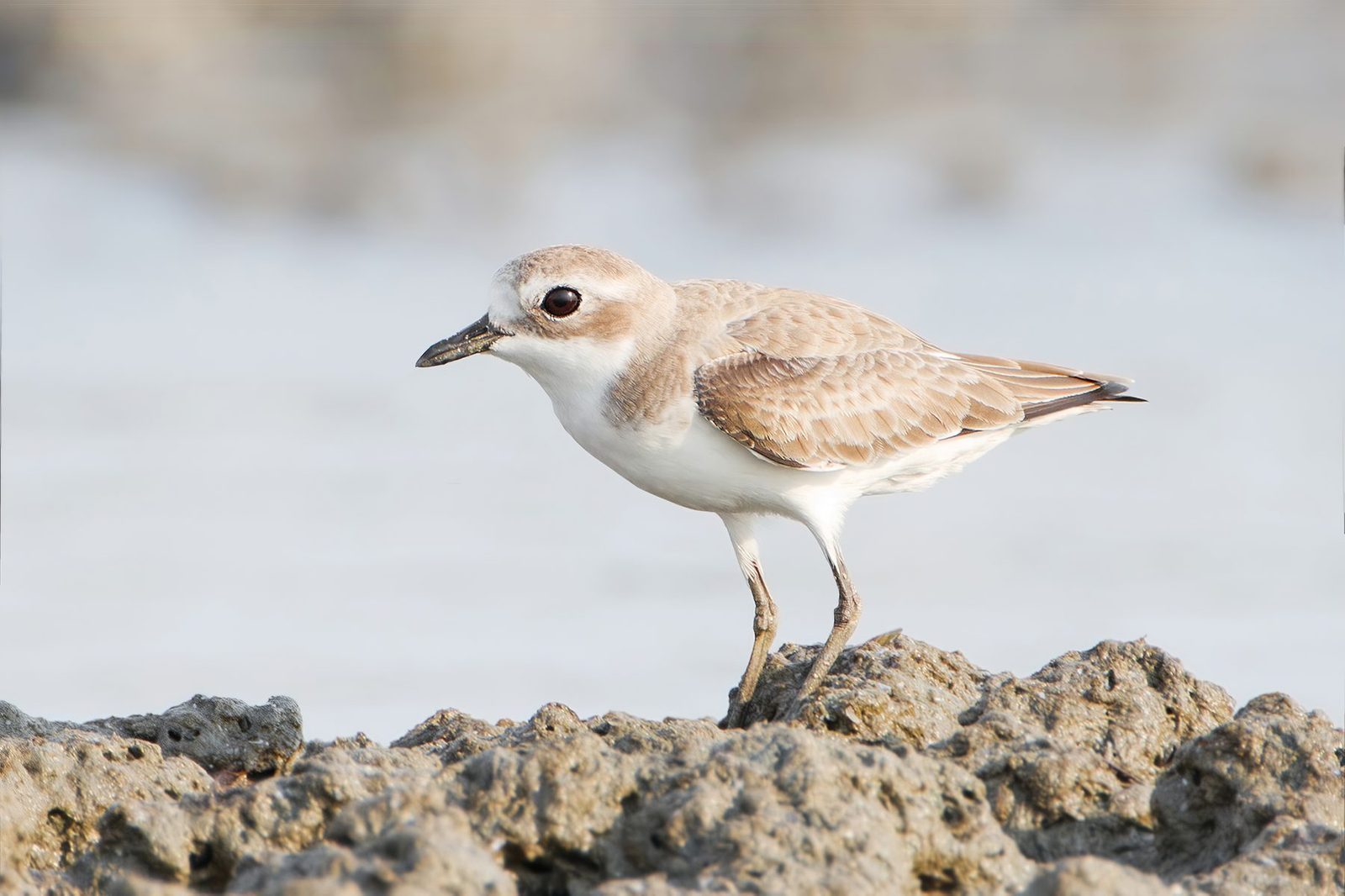
Lesser Sand Plover
Endangered
Lesser Sand Plover
Charadrius mongolus
Small, compact, easily overlooked in mixed wader flocks. Breeds in high-altitude Asia, winters on Australian mudflats.
Open threat profile →
Vulnerable and Near Threatened

Species under increasing pressure — not yet in crisis, but the trend lines are moving in the wrong direction.

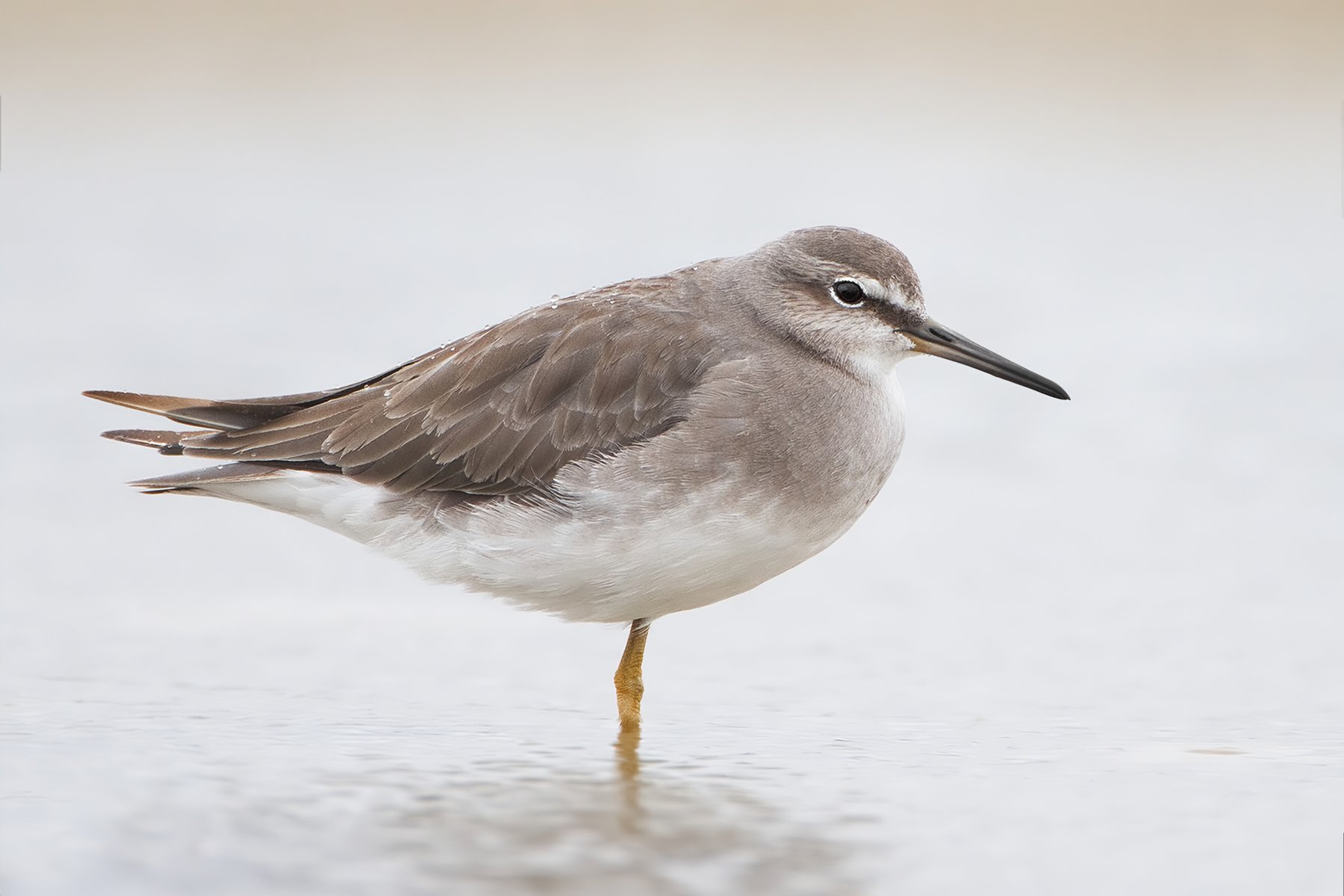
Grey-tailed Tattler
Vulnerable
Grey-tailed Tattler
Tringa brevipes
Distinctive tail-bobbing and a two-note whistle. Often the first migrant to arrive in September — an early season marker.
Open threat profile →
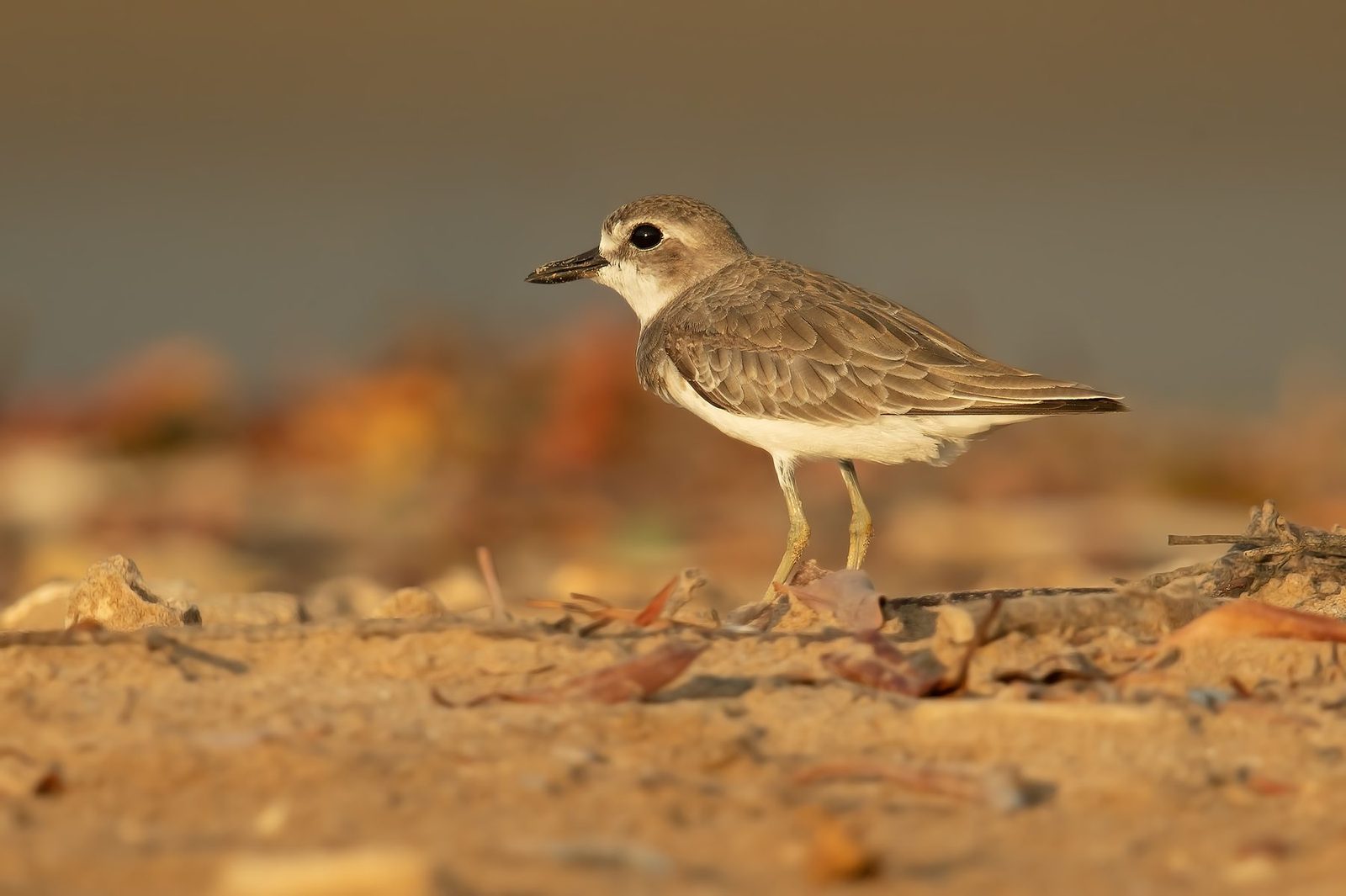
Greater Sand Plover
Vulnerable
Greater Sand Plover
Charadrius leschenaultii
Larger than the Lesser Sand Plover — and the heavier, longer bill is the key field mark. Non-breeding plumage: plain brown above, white below.
Open threat profile →
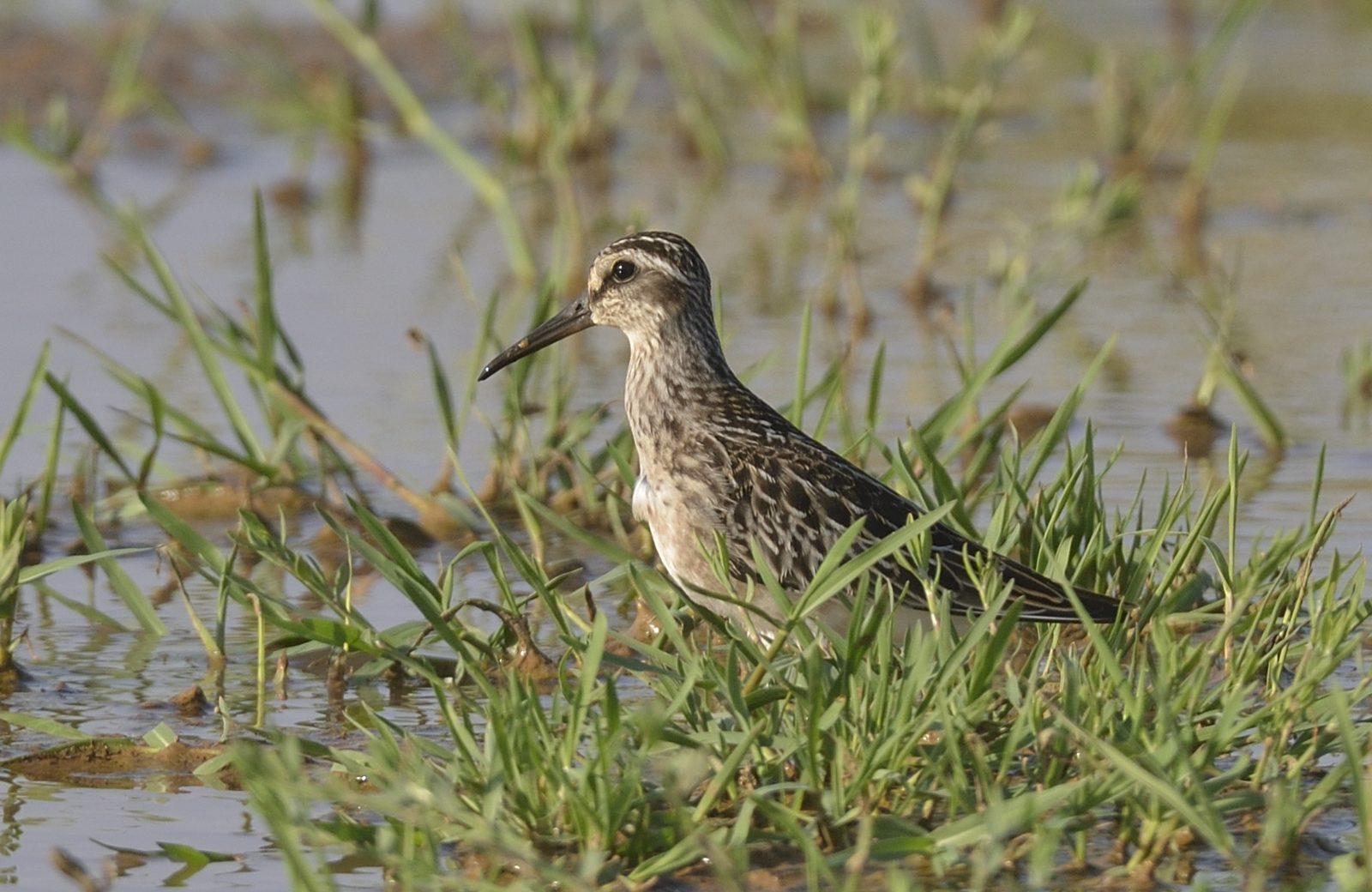
Broad-billed Sandpiper · Dûrzan Cîrano CC BY-SA
Vulnerable
Broad-billed Sandpiper
Calidris falcinellus
The bird that asks you to look more carefully. Small, plain, hunkered in a stint flock — and making the same flyway crossing as the godwit.
Open threat profile →
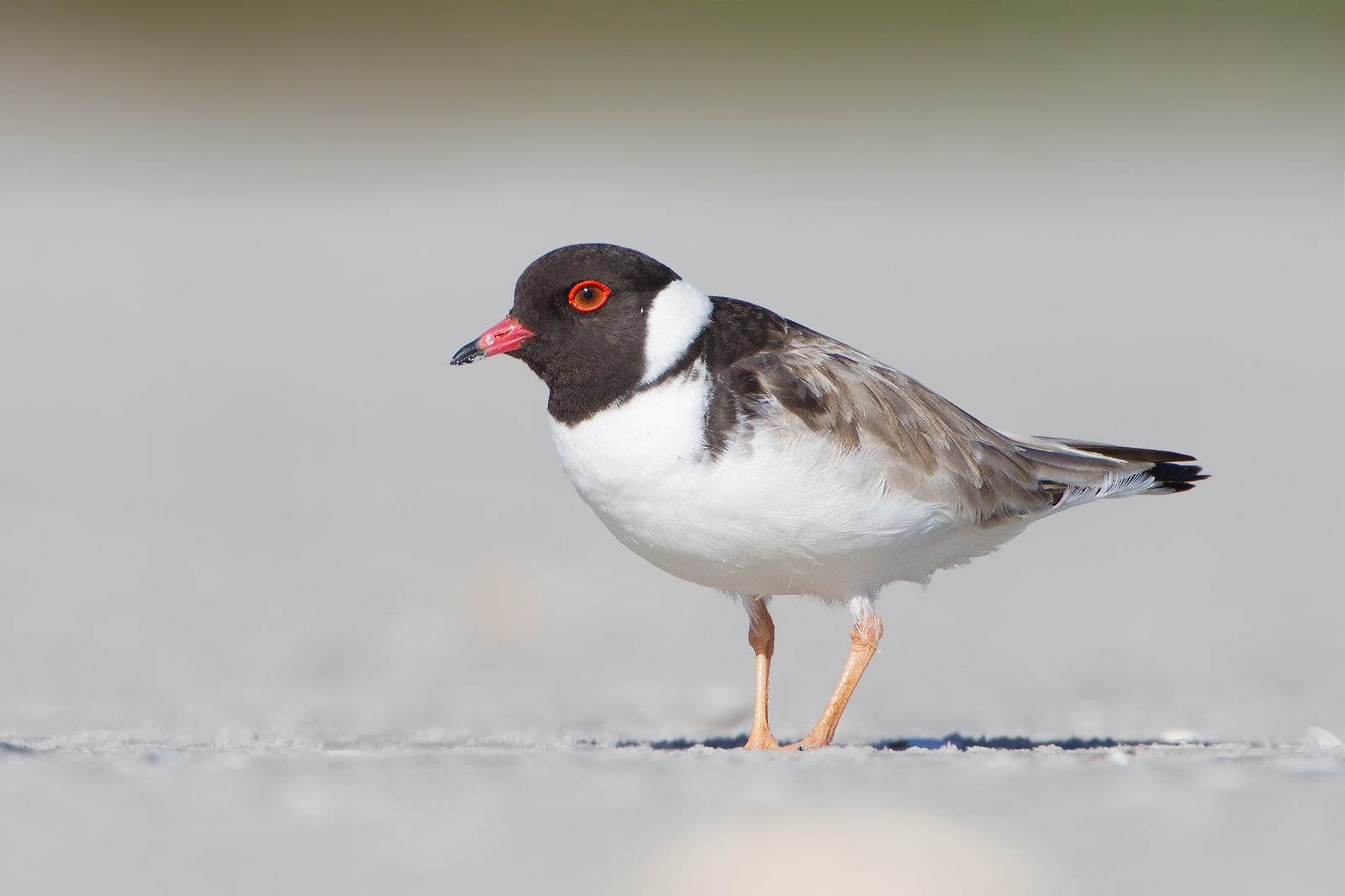
Hooded Plover · JJ Harrison CC BY-SA
Vulnerable
Hooded Plover
Thinornis cucullatus
It nests on the open beach, just above the high tide line, in the path of every dog and every bare foot. Vulnerable by classification — utterly exposed by habit.
Open threat profile →
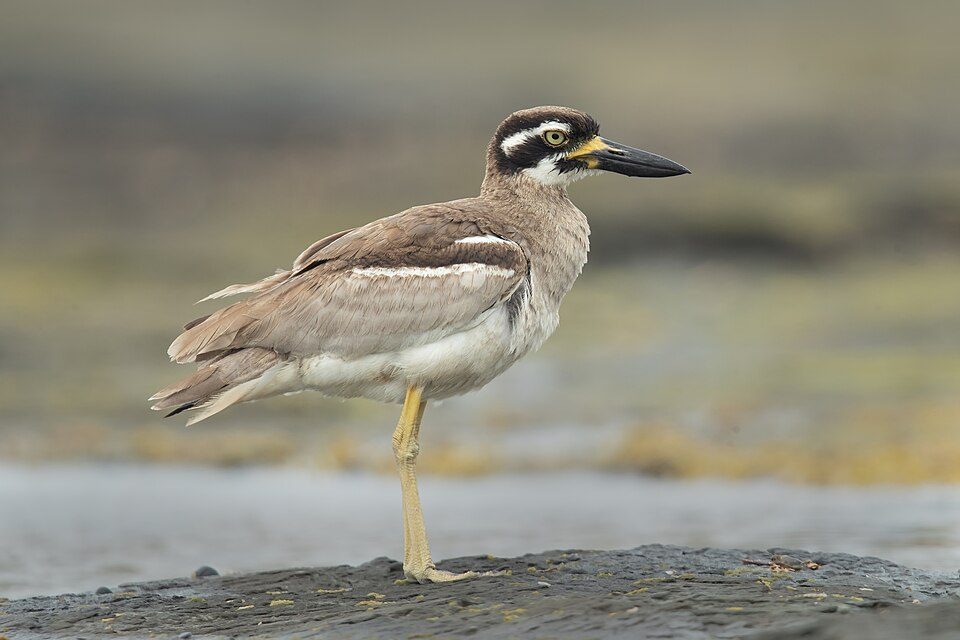
Beach Stone-curlew
Near Threatened
Beach Stone-curlew
Esacus magnirostris
Large, unmistakeable resident of beaches and reef platforms. Resident at Moreton Bay year-round — and one of the quietest success stories for site protection.
Open threat profile →
Migratory visitors

Regular visitors using Moreton Bay as a non-breeding staging site. Their presence, numbers, and behaviour are the baseline against which change is measured.

Red-necked Stint
Migratory
Red-necked Stint
Calidris ruficollis
The most abundant migratory shorebird at Moreton Bay. First flushed, last to return — the sentinel of the roost.
Open species profile →
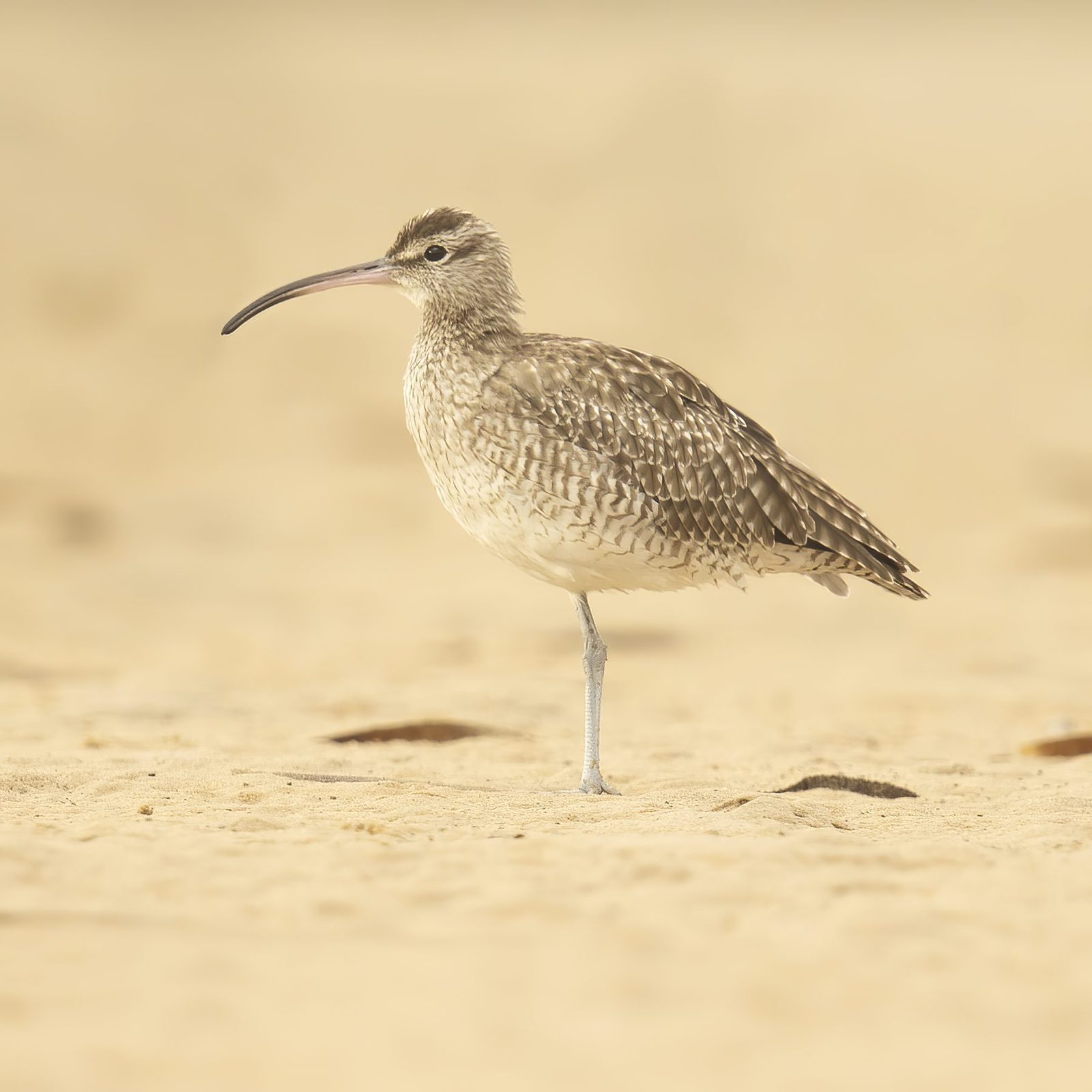
Whimbrel
Migratory
Whimbrel
Numenius phaeopus variegatus
Striped crown, decurved bill, and a haunting bubbling call that carries clearly across the mudflat.
Open species profile →
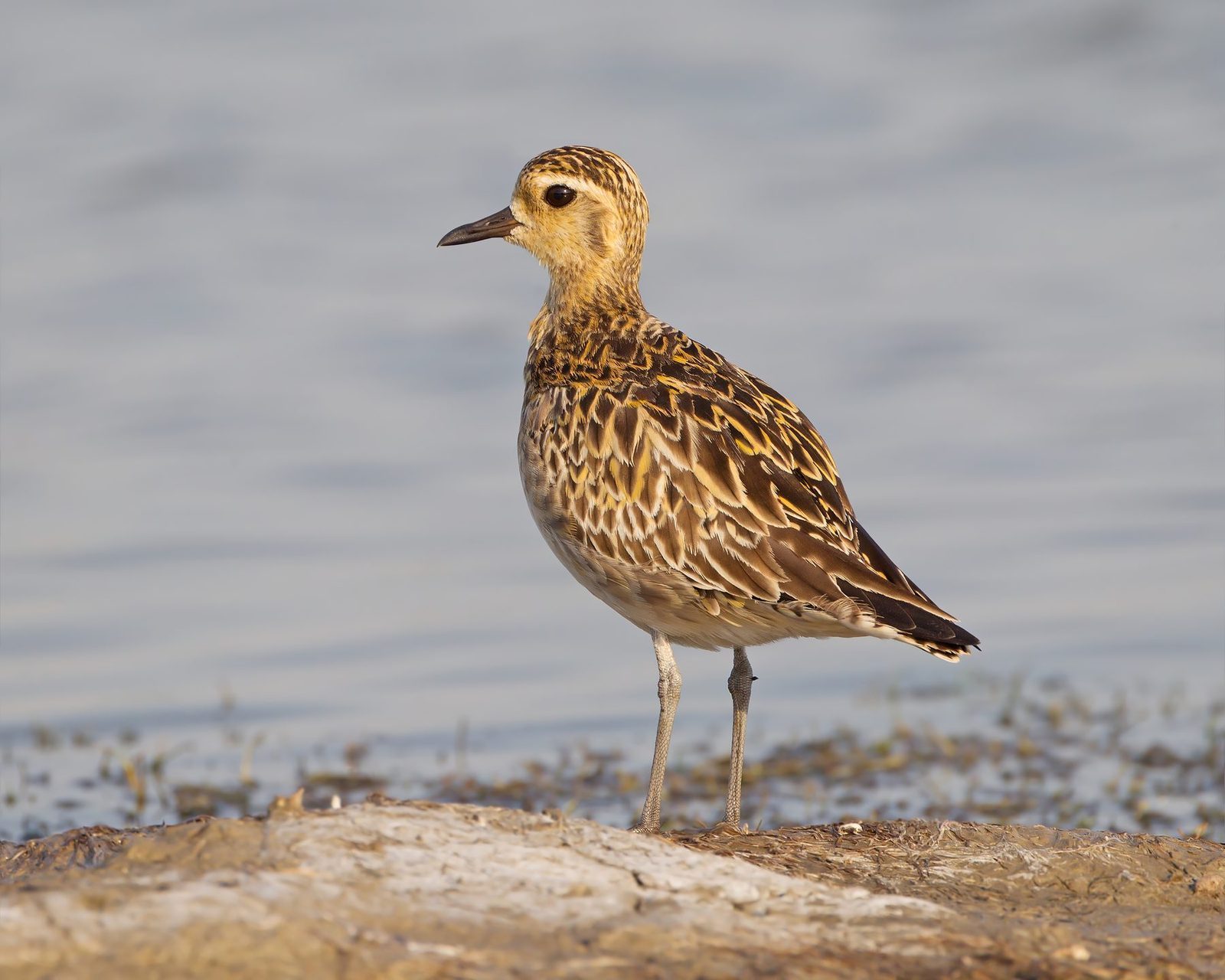
Pacific Golden Plover
Migratory
Pacific Golden Plover
Pluvialis fulva
Golden-spangled upperparts and a large dark eye. Feeds in a stop-and-run pattern on open ground and mudflat margins.
Open species profile →
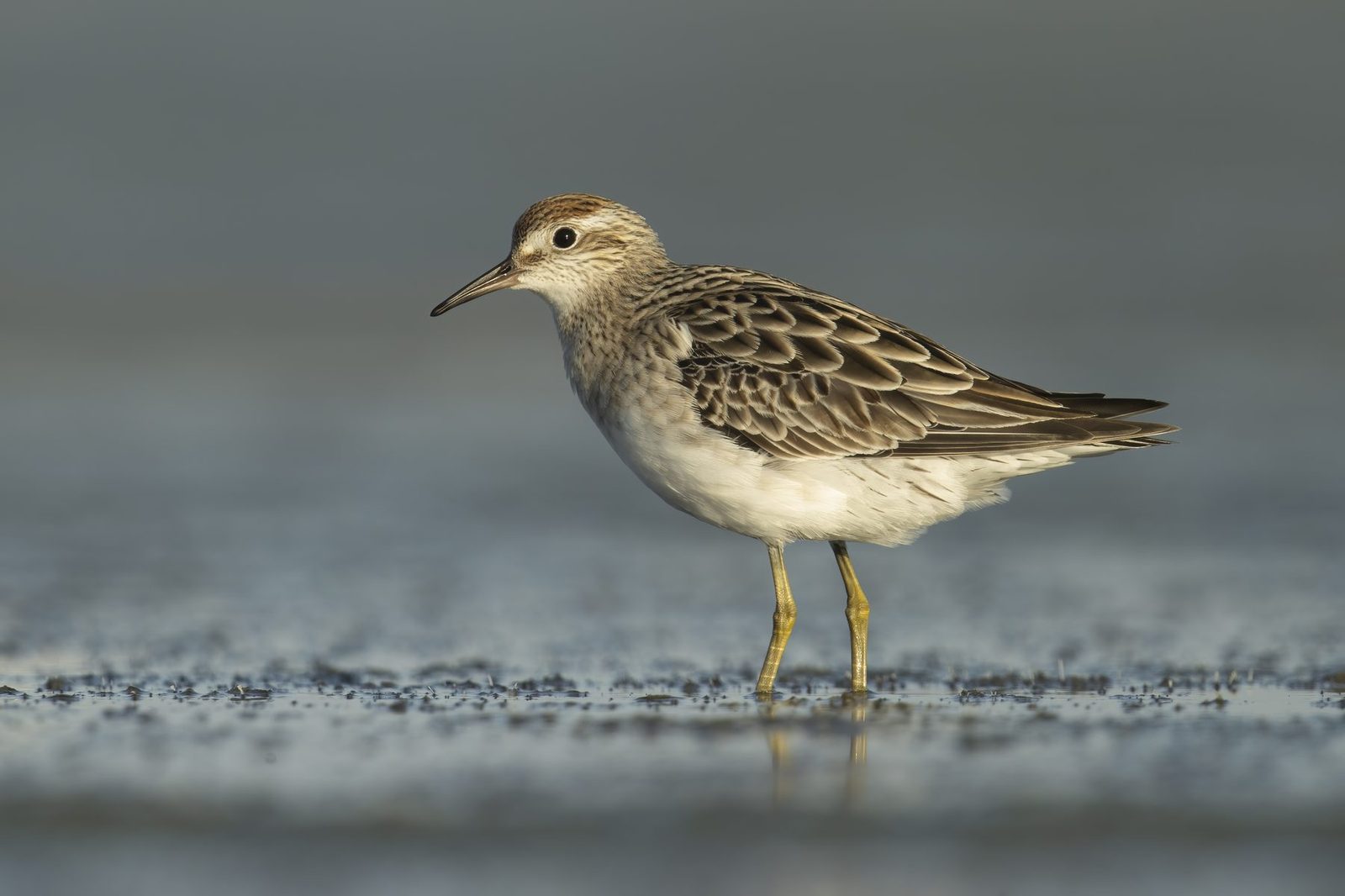
Sharp-tailed Sandpiper
Migratory
Sharp-tailed Sandpiper
Calidris acuminata
Distinctive ginger crown. One of the more common sandpipers at Moreton Bay, visiting coastal and freshwater margins.
Open species profile →
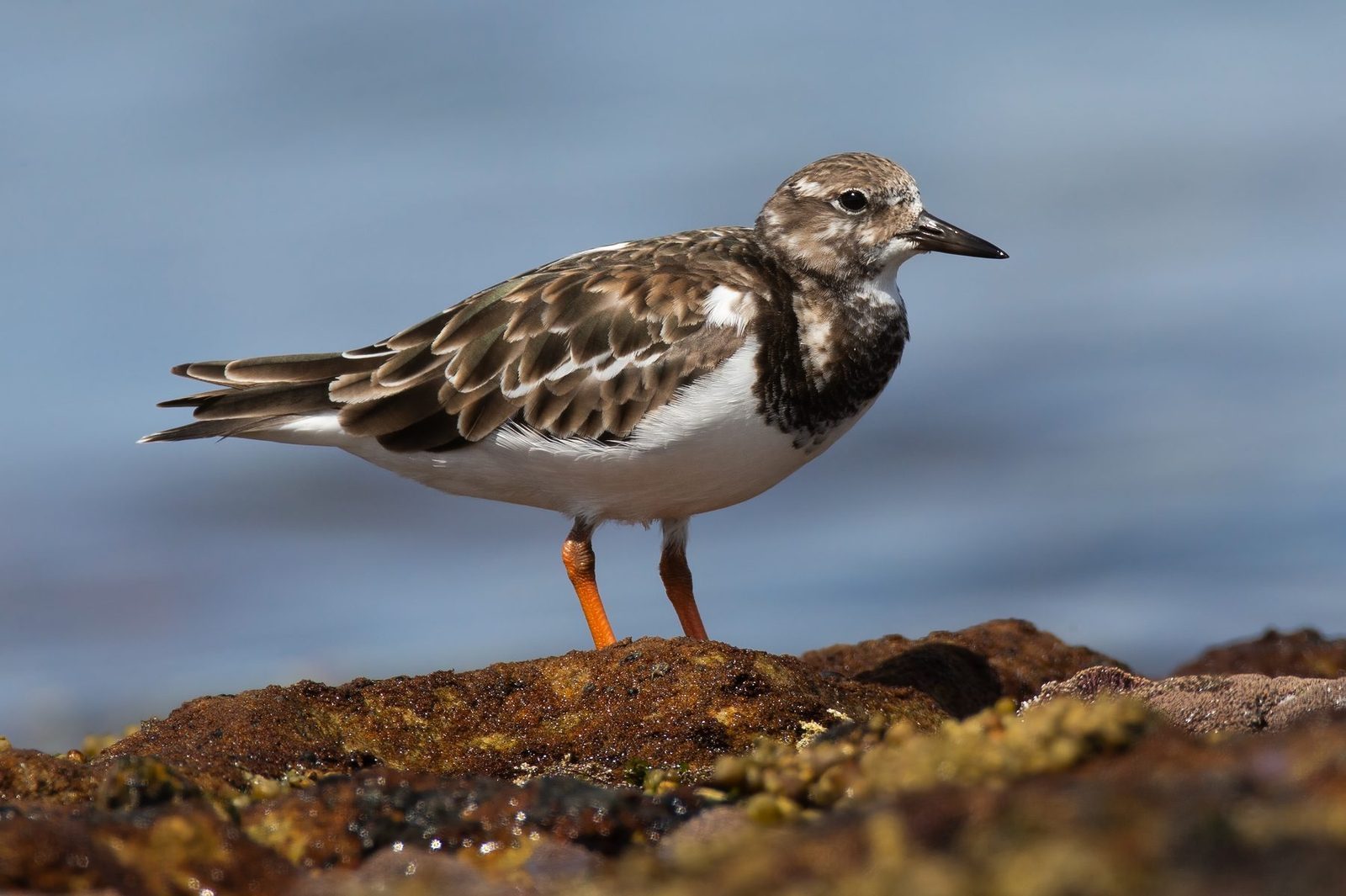
Ruddy Turnstone
Migratory
Ruddy Turnstone
Arenaria interpres
Stocky, strikingly patterned, and found on rock platforms rather than open mudflat. Flips stones and debris for invertebrates.
Open species profile →
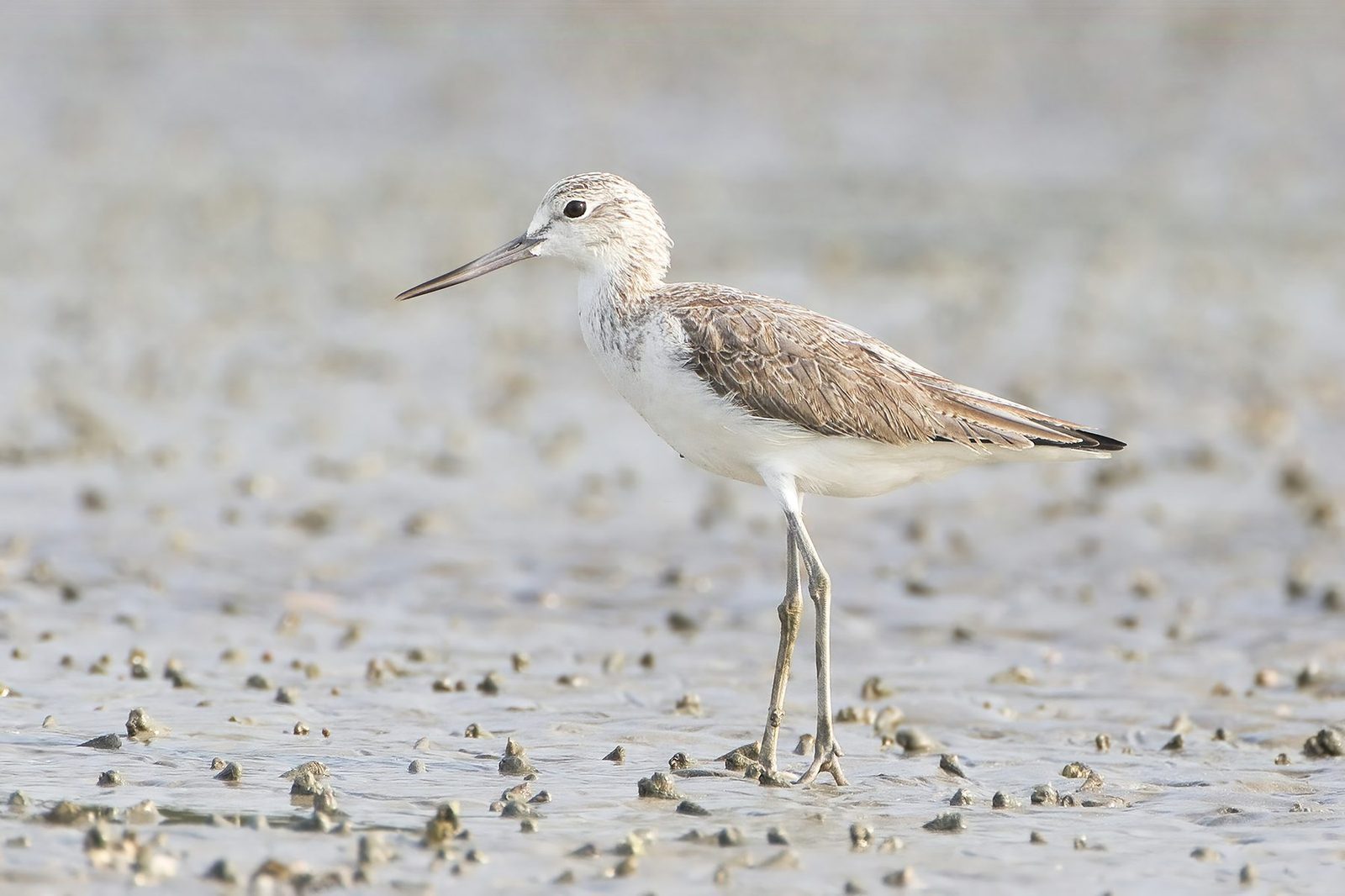
Common Greenshank
Migratory
Common Greenshank
Tringa nebularia
Large, long-legged, with a piping three-note alarm call that carries across open water. White rump conspicuous in flight.
Open species profile →
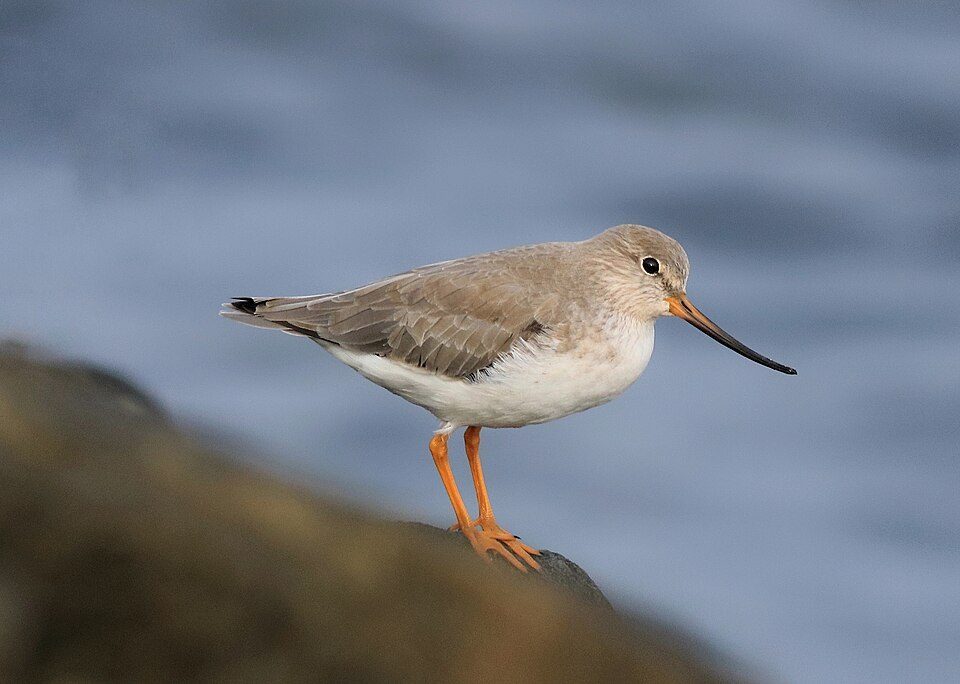
Terek Sandpiper
Migratory
Terek Sandpiper
Xenus cinereus
Unmistakeable once seen: an upturned bill with an orange base, energetic feeding style, and bright orange-yellow legs.
Open species profile →
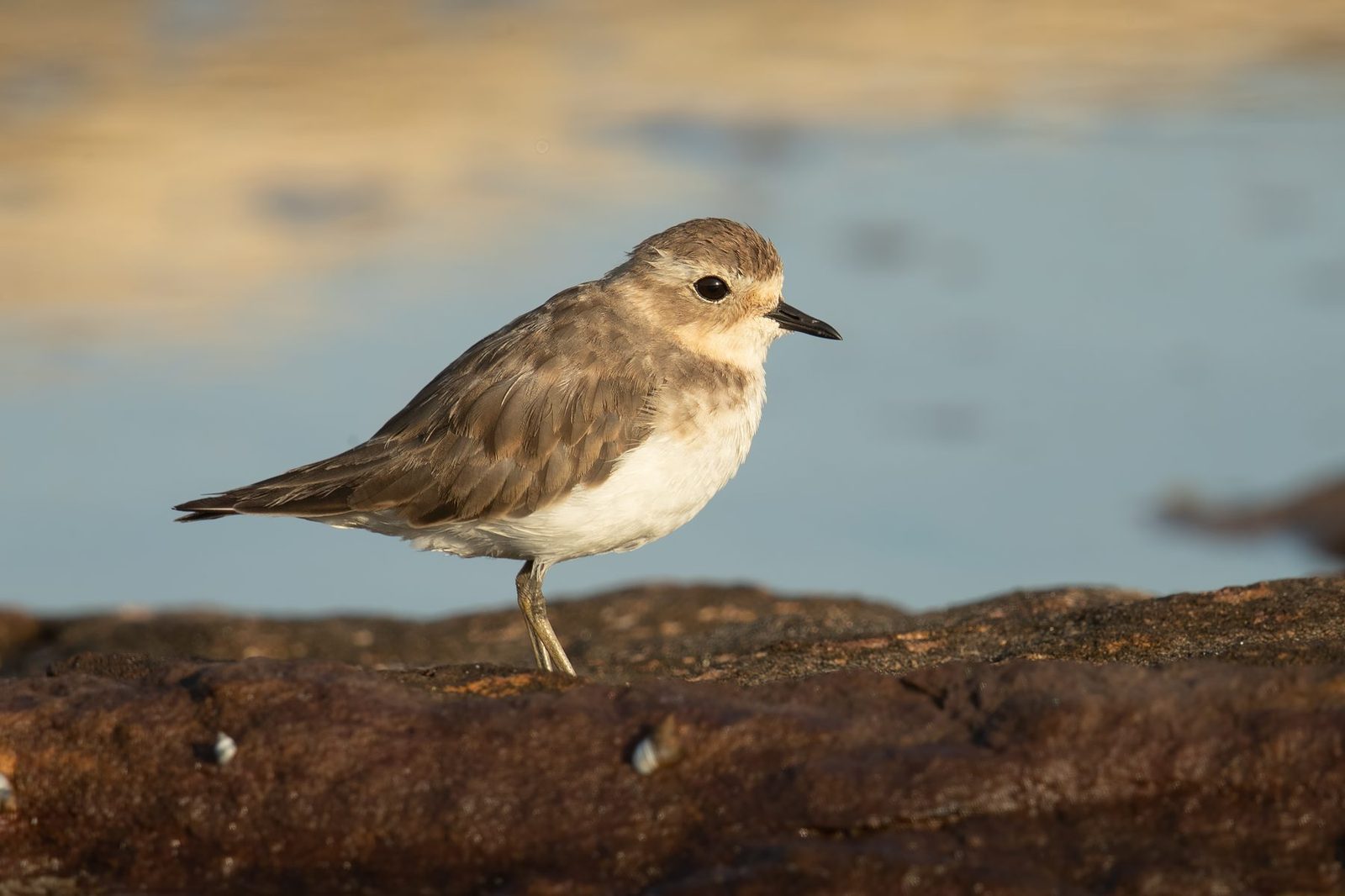
Double-banded Plover
Migratory
Double-banded Plover
Charadrius bicinctus
A winter visitor from New Zealand. Non-breeding plumage: plain brown above, white below. Check for faint band across the breast.
Open species profile →
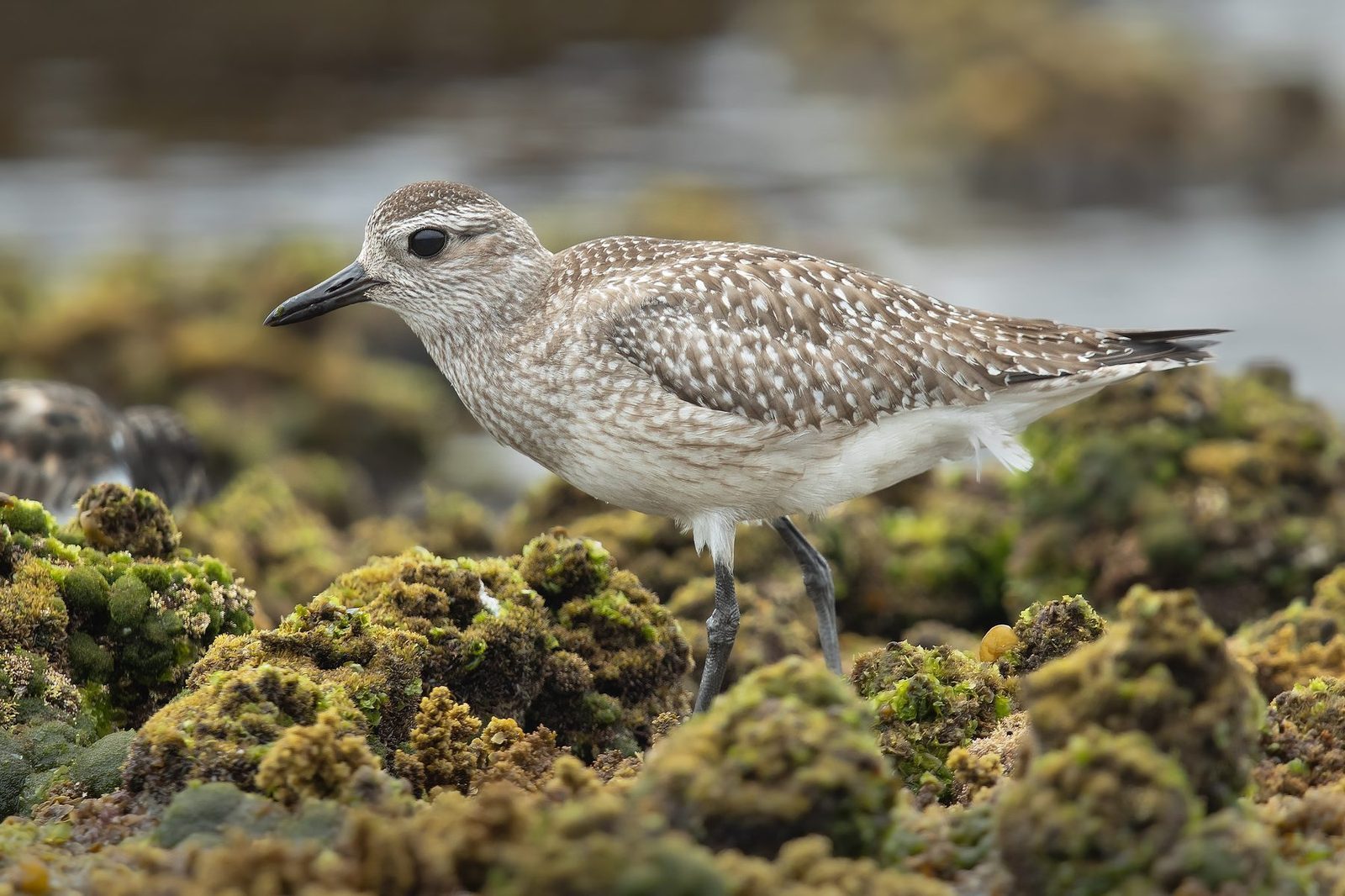
Grey Plover
Migratory
Grey Plover
Pluvialis squatarola
Larger and heavier than Pacific Golden Plover. Black armpits in flight are the definitive field mark. Occasional visitor to Moreton Bay.
Open species profile →
Sanderling
Migratory
Sanderling
Calidris alba
The classic wave-chasing sandpiper of ocean beaches. Pale grey above, white below, running with the surf line.
Open species profile →
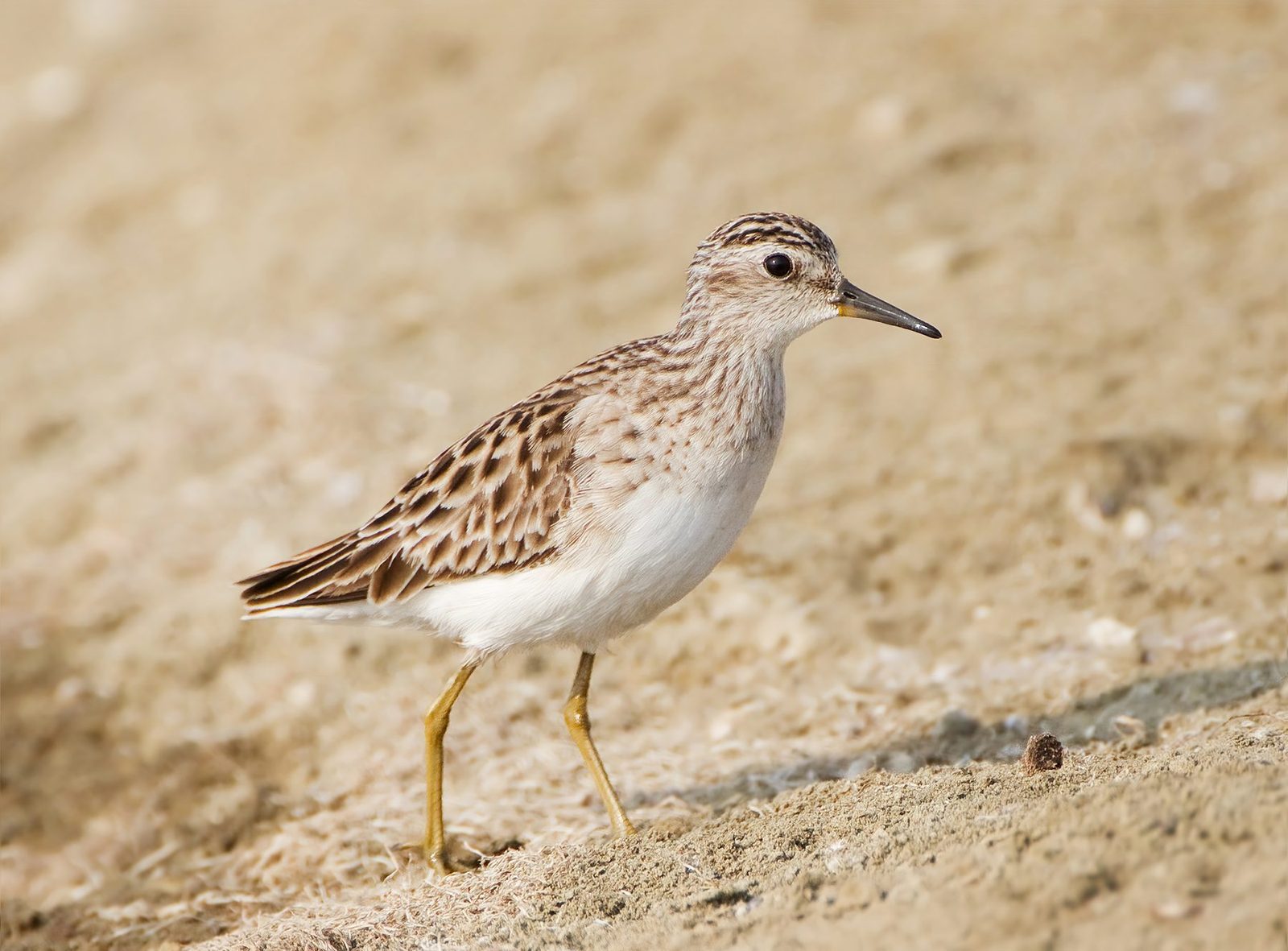
Long-toed Stint
Migratory
Long-toed Stint
Calidris subminuta
A small stint of freshwater margins and mudflat edges. Longer toes and a more upright posture than Red-necked Stint.
Open species profile →
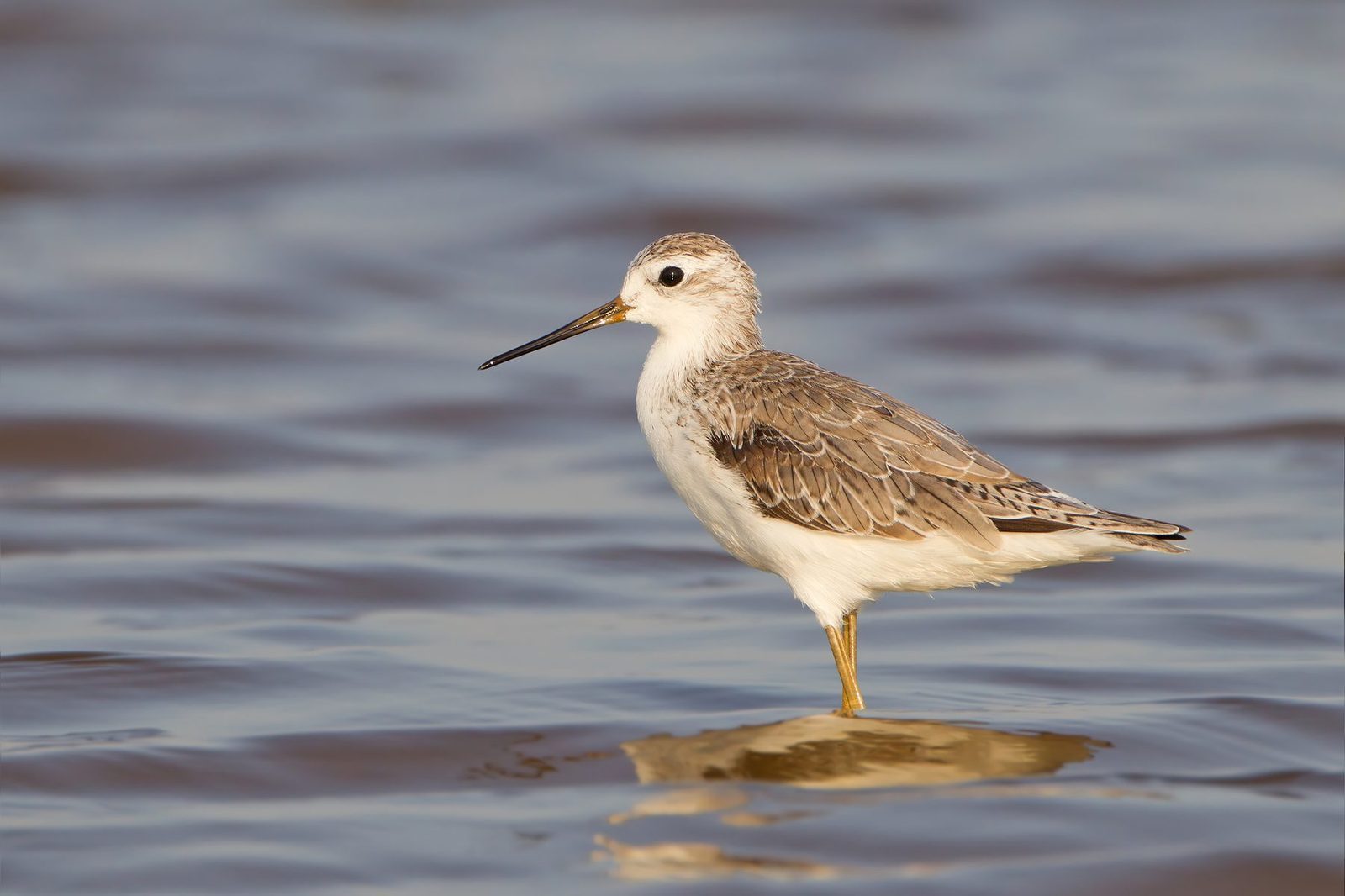
Marsh Sandpiper
Migratory
Marsh Sandpiper
Tringa stagnatilis
A slender, delicate wader with very long legs and a fine straight bill. Elegant in flight — white wedge up the back is diagnostic.
Open species profile →
Asian Dowitcher · JJ Harrison CC BY-SA
Near Threatened
Asian Dowitcher
Limnodromus semipalmatus
Rare enough that a confirmed sighting demands an immediate record. Resembles a small godwit — until the sewing-machine probe begins.
Open threat profile →
Common Sandpiper · JJ Harrison CC BY-SA
Least Concern
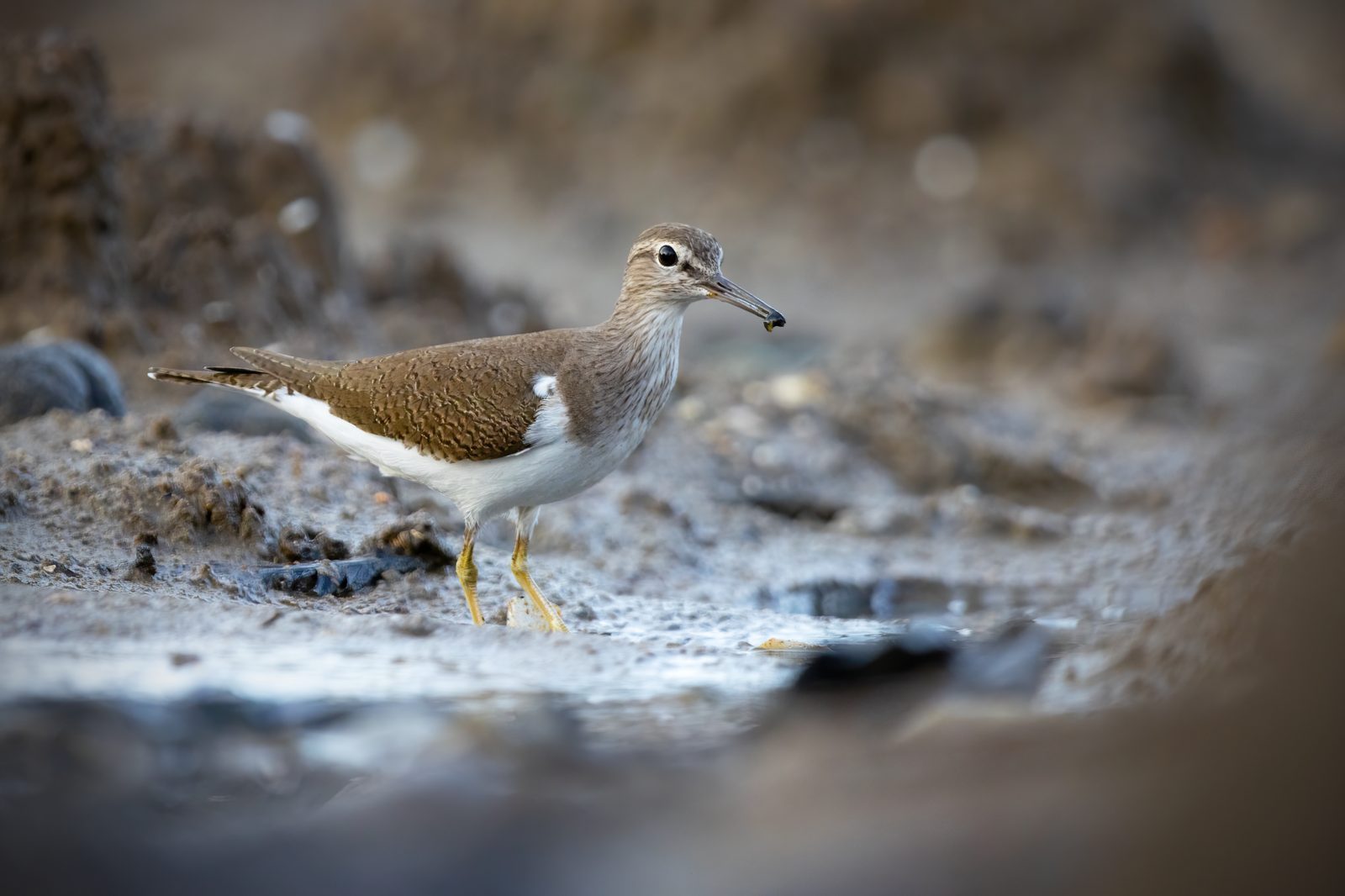
Common Sandpiper
Actitis hypoleucos
The tail bob is constant, compulsive, diagnostic. You hear the piping call first — then find it alone at a rocky edge or mangrove margin, nothing like anything else at the site.
Open threat profile →
Resident species

Present year-round. Breeding on open beaches and intertidal zones alongside migratory visitors. Not second-class citizens — they share the same habitat under equal and often overlooked pressure.

Pied Oystercatcher
Resident · Breeding
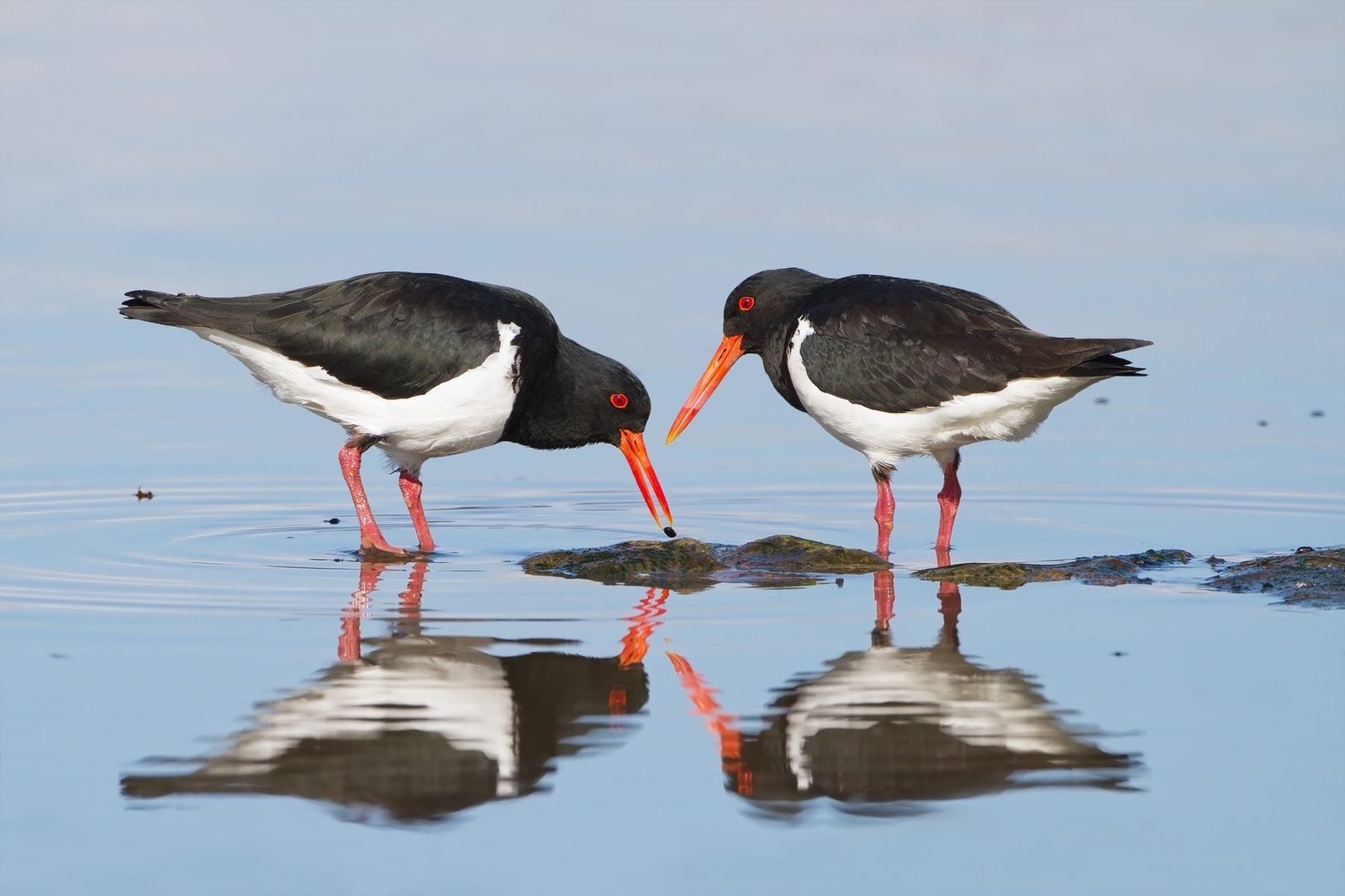
Pied Oystercatcher
Haematopus longirostris
Bold, loud, unmistakeable — and nesting on open sand where dogs and joggers pass every morning.
Open species profile →
Sooty Oystercatcher
Resident · Breeding
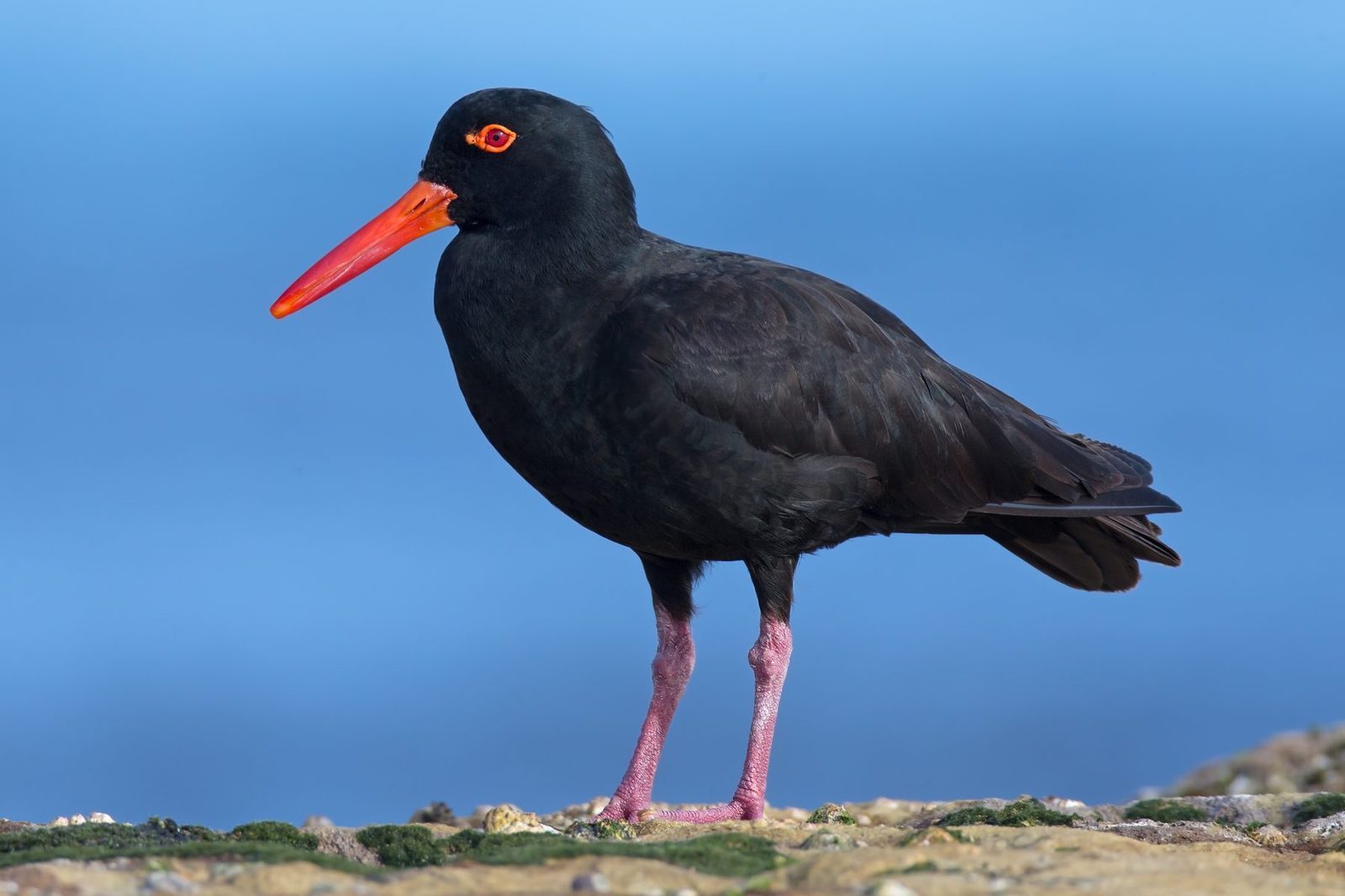
Sooty Oystercatcher
Haematopus fuliginosus
All-black, less common than the Pied, found on rocky shores and reefs. A resident breeder present year-round.
Open species profile →
Masked Lapwing
Resident
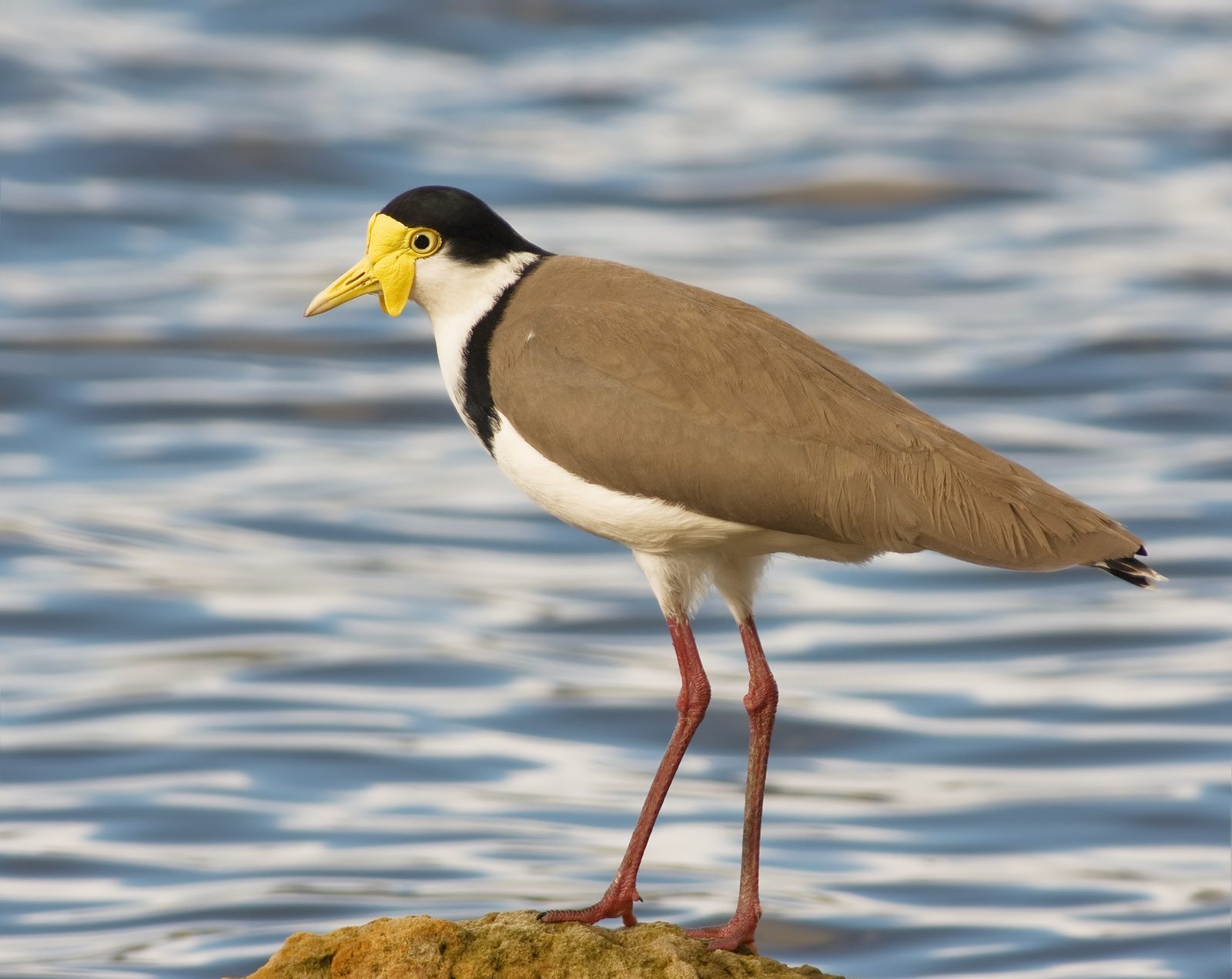
Masked Lapwing
Vanellus miles novaehollandiae
Common, vocal, and an important part of the ecological context. Their alarm calls often signal disturbance before you can see it.
Open species profile →
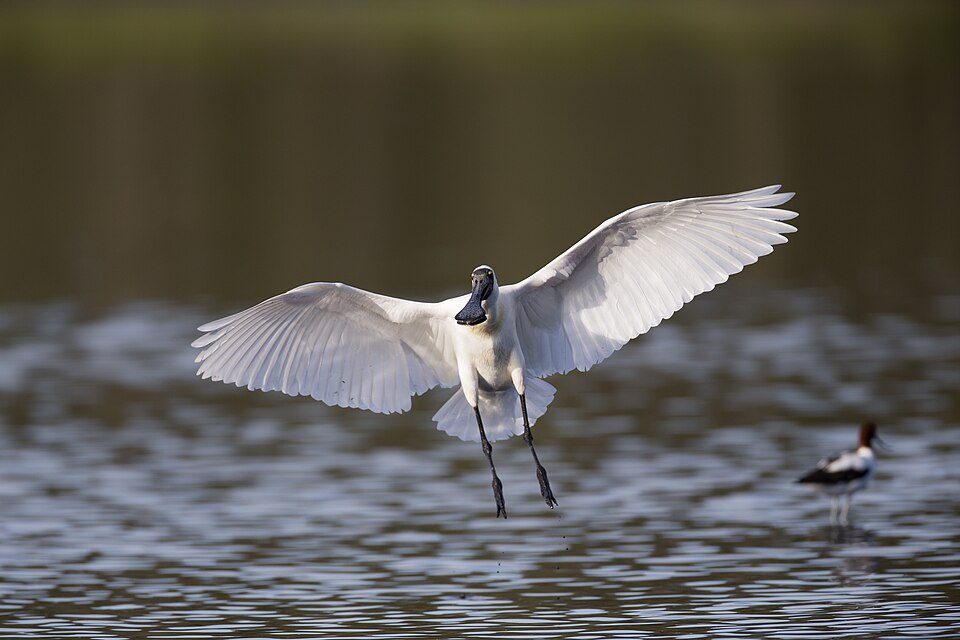
Royal Spoonbill
Resident
Royal Spoonbill
Platalea regia
Large, unmistakeable, with a distinctive spatulate bill. Sweeps the shallows for small fish and invertebrates at low tide.
Open species profile →
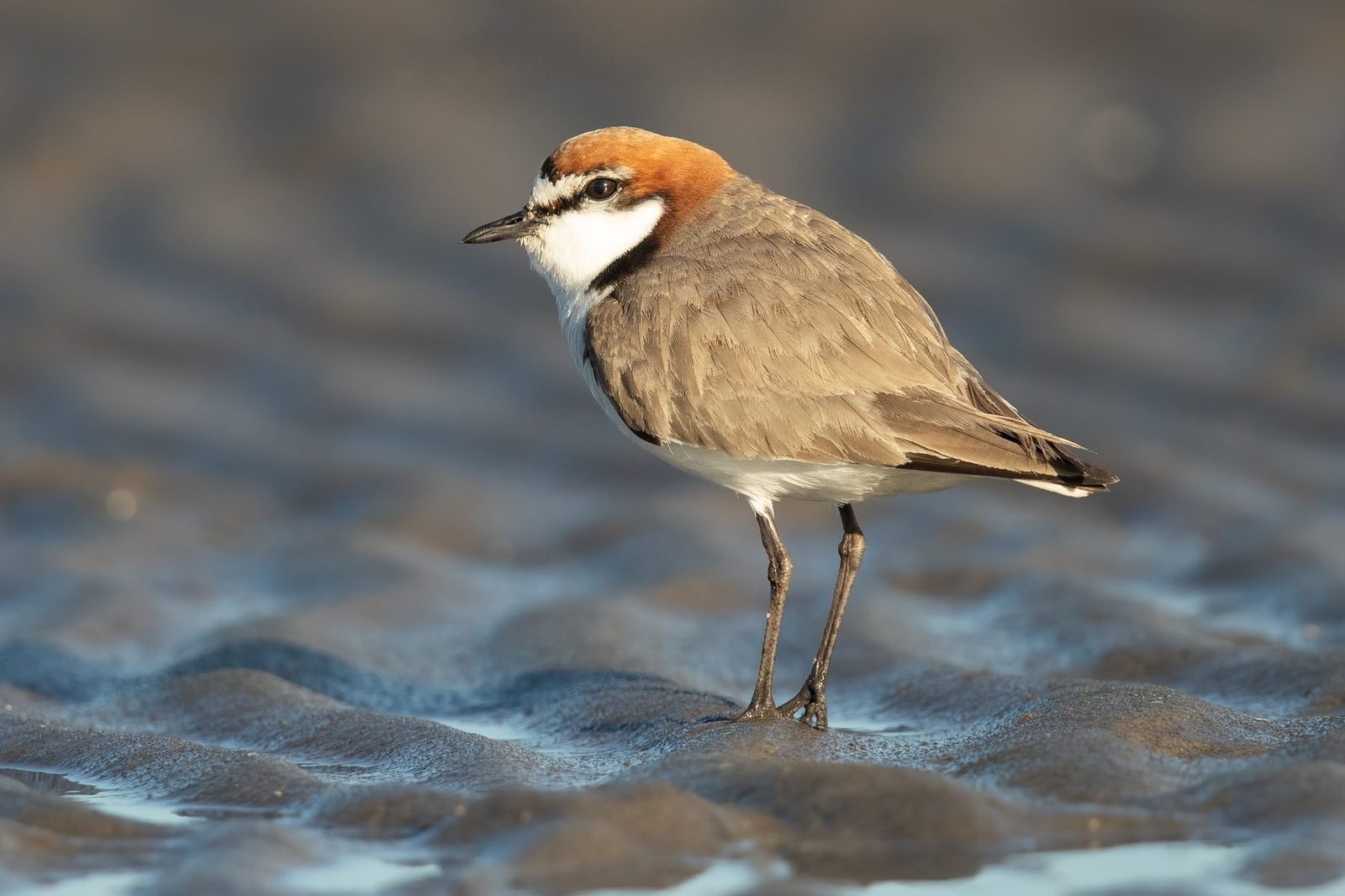
Red-capped Plover
Resident · Breeding
Red-capped Plover
Charadrius ruficapillus
A small, fast-running endemic beach-nesting resident. One of the most vulnerable ground-nesters at Moreton Bay.
Open species profile →
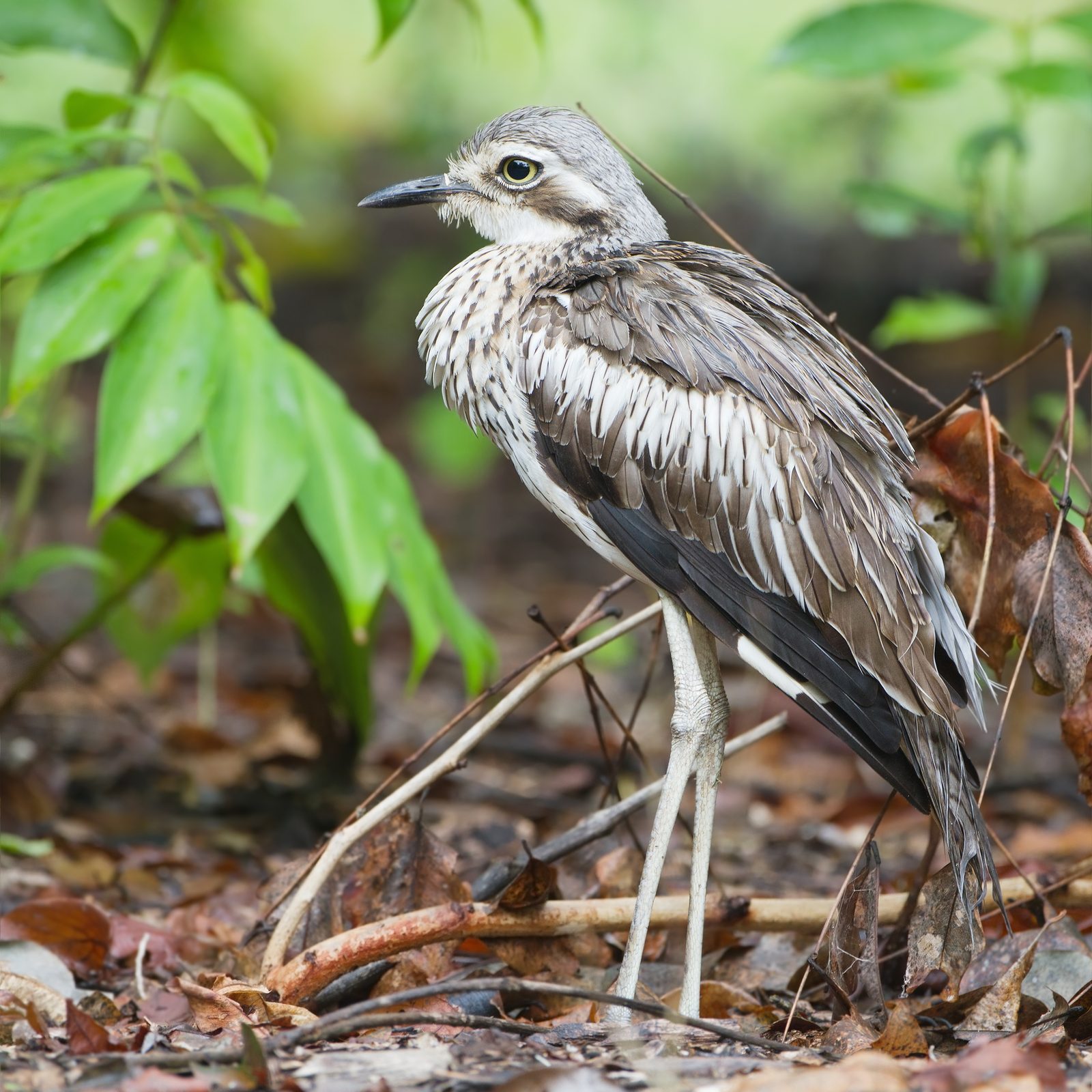
Bush Stone-curlew · JJ Harrison CC BY-SA
Resident · Breeding
Bush Stone-curlew
Burhinus grallarius
Present long before the subdivision. Large-eyed, grey-streaked, frozen like a shadow. Hears everything. Sees everything. Tells you nothing — until dark.
Open threat profile →
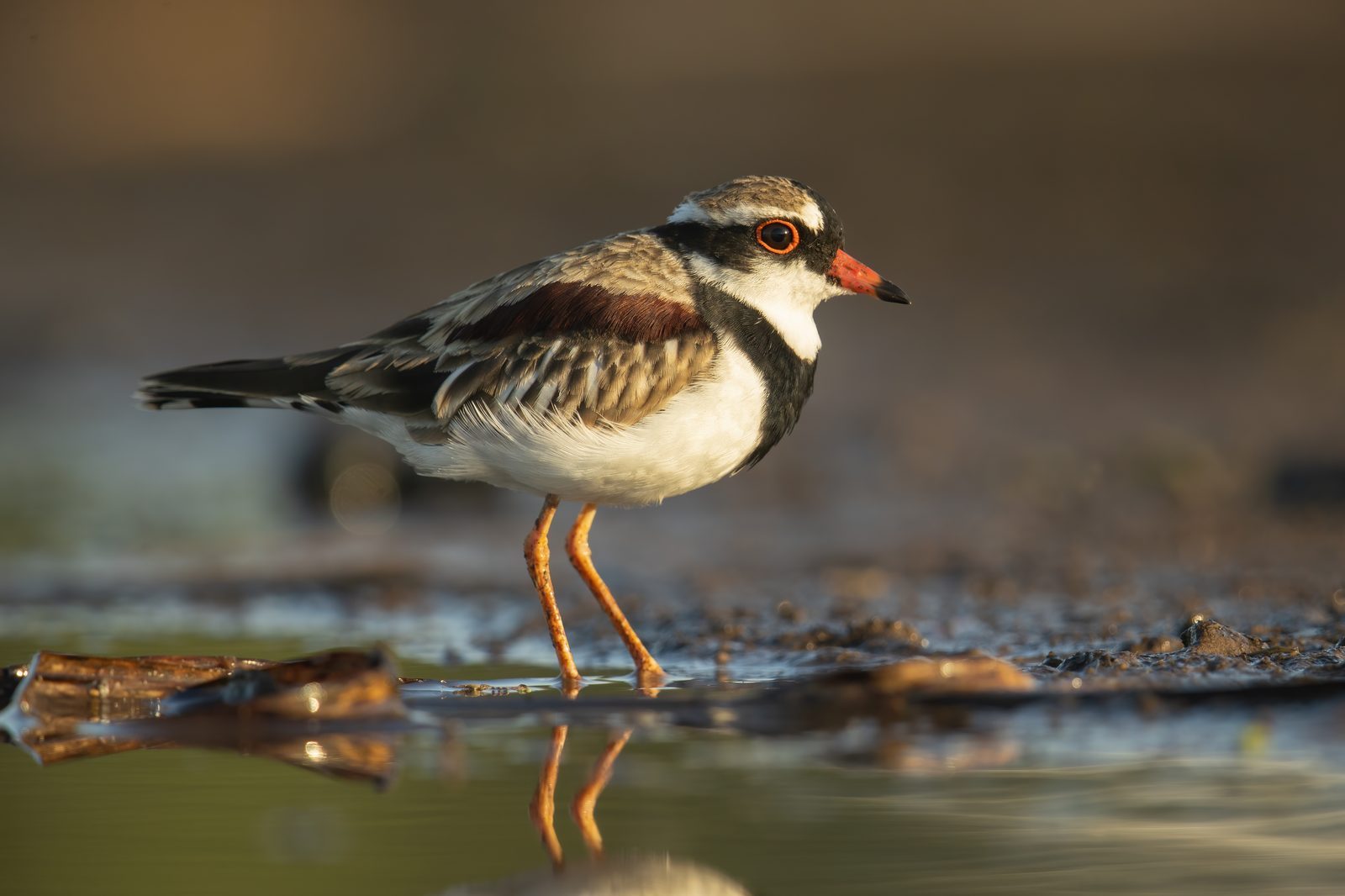
Black-fronted Dotterel · JJ Harrison CC BY-SA
Resident · Breeding
Black-fronted Dotterel
Elseyornis melanops
Tiny, restless, always at the freshwater margin. The black T-pattern and red eye ring make it unmistakeable — if you're looking at the right edge of the site.
Open threat profile →
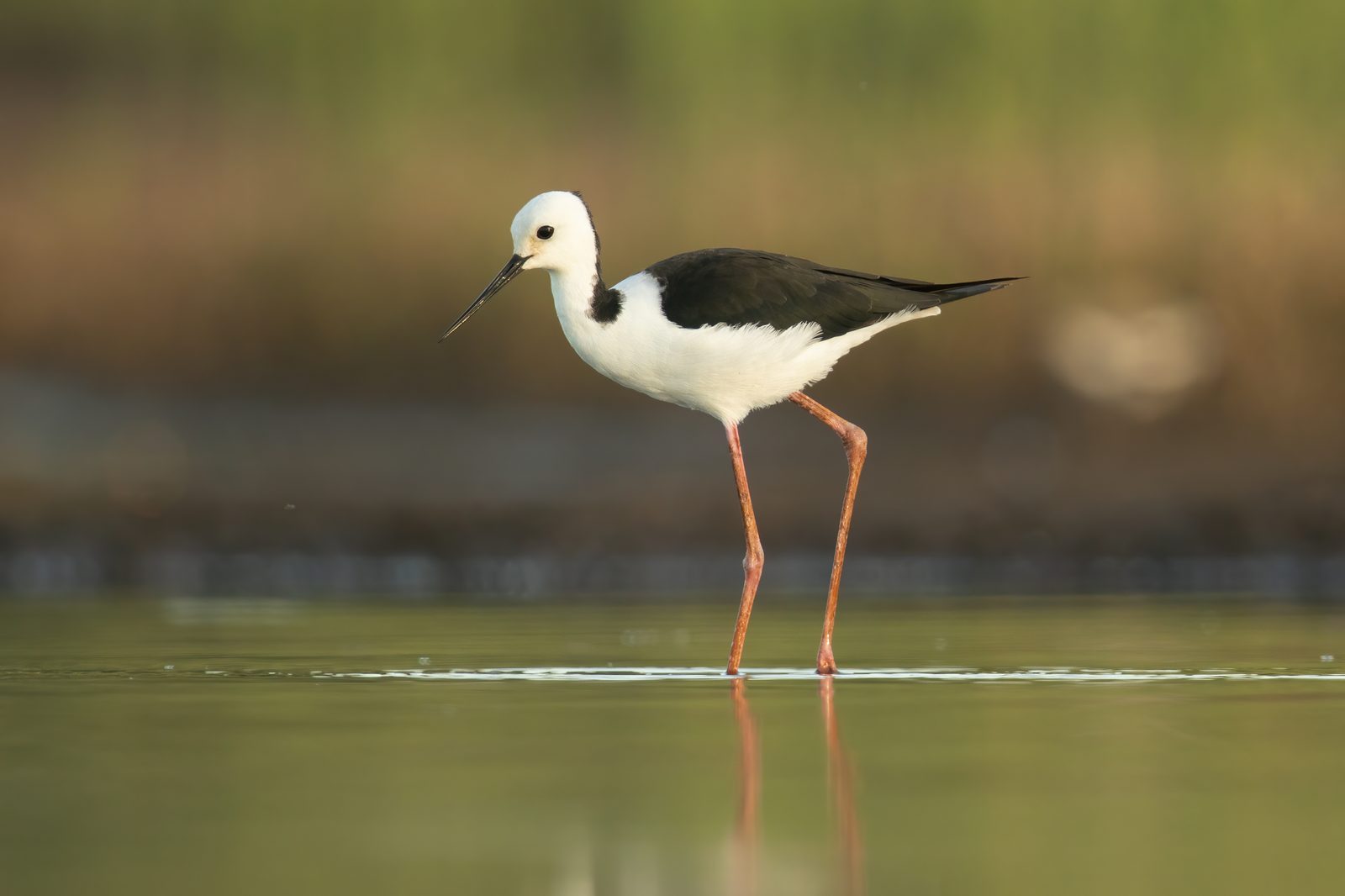
Pied Stilt · JJ Harrison CC BY-SA
Resident · Breeding
Pied Stilt
Himantopus leucocephalus
Long pink legs, loud opinion, visible at 200 metres. The stilt has no patience for ambiguity — it will tell you, at length and at volume, when you have come too close.
Open threat profile →
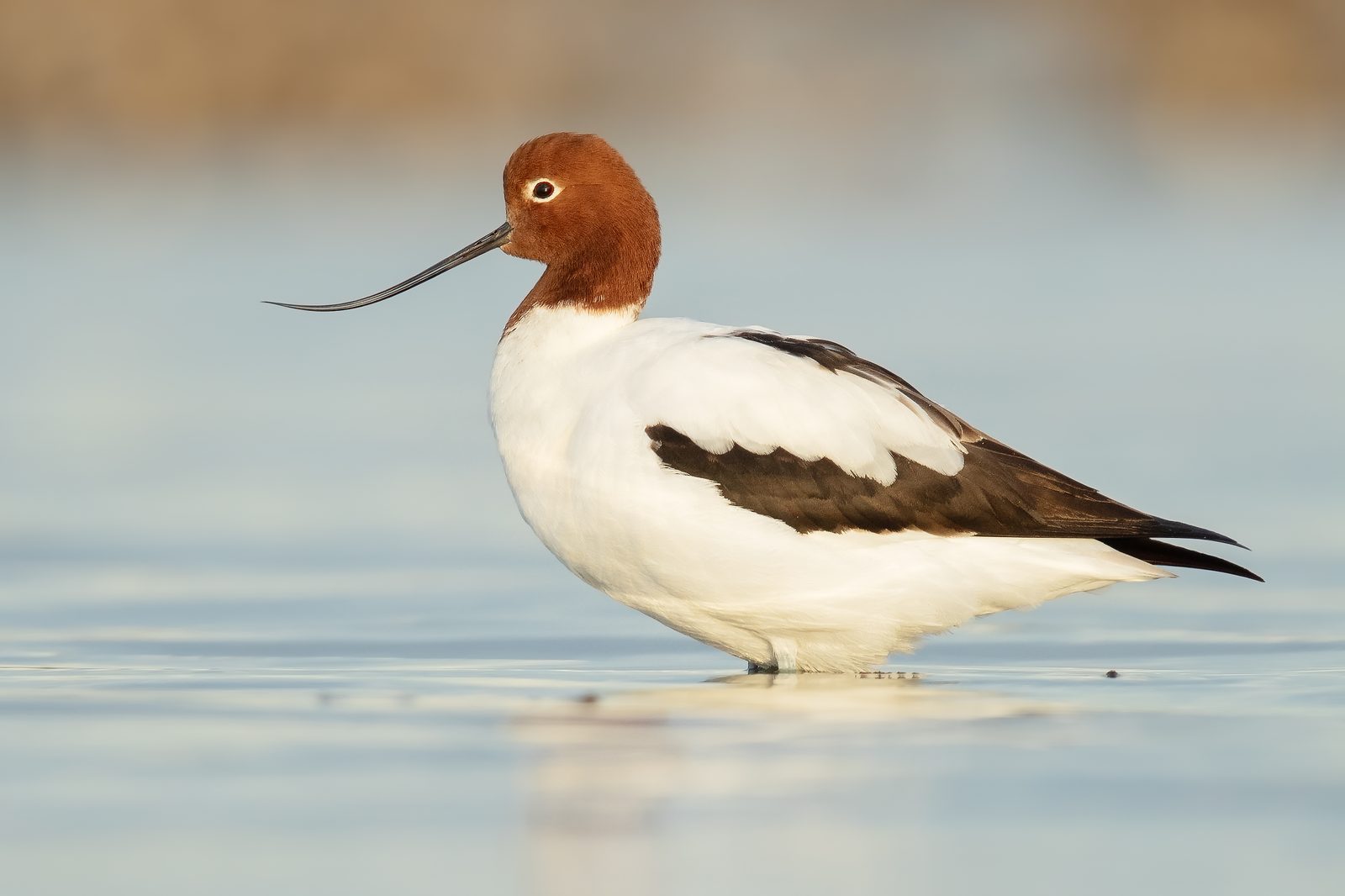
Red-necked Avocet · JJ Harrison CC BY-SA
Resident · Nomadic
Red-necked Avocet
Recurvirostra novaehollandiae
The chestnut head and upcurved bill make it one of the most elegantly marked birds at Moreton Bay. Nomadic, not migratory — it follows rainfall, not a calendar.
Open threat profile →
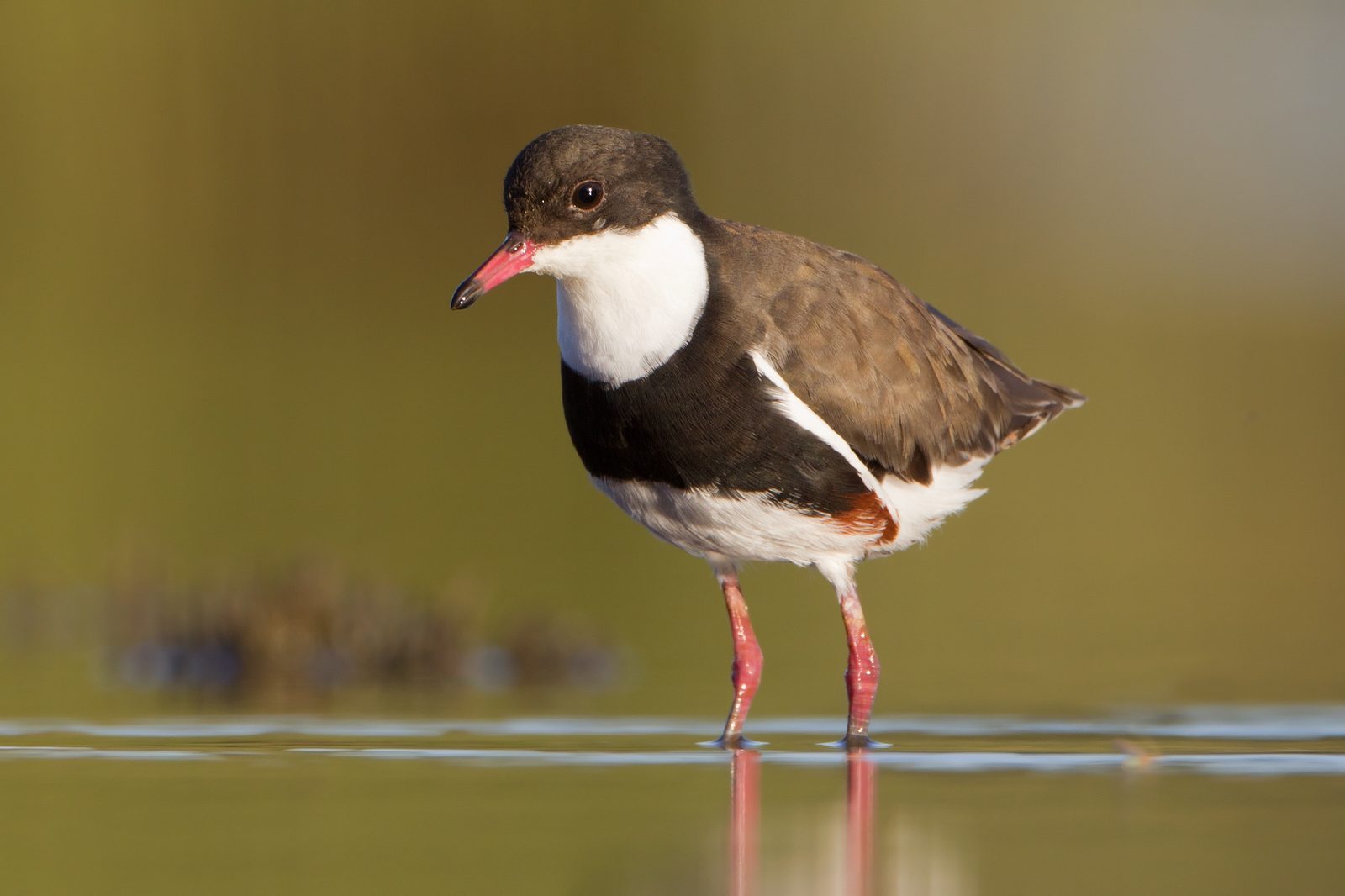
Red-kneed Dotterel · JJ Harrison CC BY-SA
Resident · Breeding
Red-kneed Dotterel
Erythrogonys cinctus
Black hood, white throat, brown back — and the red knee joint that names it. A wetland specialist that works the freshwater margins while the migratory birds work the mud.
Open threat profile →
All species photography © JJ Harrison / CC BY-SA — reproduced with gratitude and in accordance with the licence  ·  jjharrison.com.au
Broad-billed Sandpiper photography: Dûrzan Cîrano / CC BY-SA · Wikimedia Commons · contact pending
Species data: BirdLife Australia Shorebirds Identification Booklet (3rd ed., 2020)  ·  EPBC Act  ·  IUCN Red List 2024
Conservation statuses current as of 2024. Bar-tailed Godwit (baueri) uplisted Vulnerable → Critically Endangered, 2021. Broad-billed Sandpiper uplisted Least Concern → Vulnerable, 2021.
Hooded Plover · JJ Harrison CC BY-SA
Vulnerable
Eastern subspecies · ~3,000 birds · beach-nesting
Hooded Plover
Thinornis cucullatus
"It nests above the high tide line, on the open beach, with no shelter and no protection. Every beach walk, every dog, every vehicle above the tide mark is a direct threat to a nest that looks like a scrape in the sand — because that is exactly what it is."
~3,000eastern population (cucullatus ssp.)
VulnerableEPBC Act · NSW Endangered · SA Vulnerable
Rare vagrantMoreton Bay — southern edge of range
Why this species is in trouble
🏖️

Beach recreation pressure — no escape

The Hooded Plover's nesting territory is the same strip of beach used by people, dogs, horses, and vehicles. Eggs incubate in a shallow scrape just above the high tide line for 28 days. The nest is invisible to anyone not looking for it. A single disturbance event during incubation on a warm day can raise egg temperature past the point of viability within minutes.

🦊

Predation — foxes, ravens and Silver Gulls

Introduced foxes are the primary predator of eggs and chicks on southern beaches. Silver Gulls — whose populations have expanded enormously in association with human food waste — take eggs and newly-hatched chicks with regularity. Corvids add further pressure. The nesting pair has no structural defence against any of these: the nest is open ground.

📉

Low recruitment — too few chicks survive

In the eastern population, chick survival to fledging is consistently poor. Monitoring in NSW and Victoria has shown breeding seasons where no chicks survived on surveyed beaches. The adult birds are long-lived and pair-faithful — which can mask the absence of recruitment until the population is already in sharp decline.

🟢 What a Steward does about this

At Moreton Bay, where the Hooded Plover is at the northern edge of its range and occurrence is rare, any confirmed sighting during the breeding season (August–January) is immediately worth recording and reporting to BirdLife Australia's Shorebird Recovery Program. The FID for a bird on an active nest is extremely short — approach within 30 metres risks nest desertion.

📖 Eastern subspecies: ~3,000 birds · Critically Endangered in NSW · beach-nesting Aug–Jan · Key ID: black hood, white collar, pink legs and eye ring · Photography: JJ Harrison · CC BY-SA
Asian Dowitcher · JJ Harrison CC BY-SA
Near Threatened
Asian Dowitcher
Limnodromus semipalmatus
"Rare at Moreton Bay — rare enough that any confirmed sighting requires an immediate record and a report. The feeding action gives it away: the relentless sewing-machine probe, up-down-up-down without pause, unlike any godwit or curlew working the same flat."
<25,000global population estimate
DecliningNear Threatened · IUCN
Sept–AprilMoreton Bay: rare but documented
Why this species is in trouble
🌏

Yellow Sea staging loss — same bottleneck

The Asian Dowitcher stages on Yellow Sea tidal flats on the northbound migration, using the same sites as Bar-tailed Godwit, Far Eastern Curlew and Great Knot. The same reclamation that is driving those species into decline is working on this one — with less documentation and less international attention, partly because the species is harder to survey and partly because its wintering grounds in Myanmar and Bangladesh are less well-monitored than Australian sites.

🎣

Hunting on wintering grounds

On wintering grounds in Myanmar, Bangladesh and India, shorebird trapping continues despite bilateral agreements. The Asian Dowitcher's larger size relative to stints and sandpipers makes it a more conspicuous target. Conservation work in these countries — engaging local communities in protection — mirrors the approach being used for the Spoon-billed Sandpiper and is beginning to show results.

🔍

Poor baseline data — hard to count, easy to miss

Population estimates for the Asian Dowitcher carry wide uncertainty. The species is genuinely rare, but it is also easily overlooked in mixed godwit and curlew assemblages at distance. Every confirmed count at a site like Moreton Bay adds to a dataset that is thin in Australia. A Steward who identifies one is not just making a record for their own log — they are contributing to the global picture.

🟢 What a Steward does about this

Any Asian Dowitcher sighting at Moreton Bay should be recorded in Shoreline Watch with full details: species, count, associated species, GPS, tidal state, date and time. It should also be reported directly to QWSG. The feeding action — rapid vertical probing, straight bill driven deep into soft mud — is the key field distinction from Bar-tailed Godwit, which probes at a shallower angle. Leg colour (dark grey-black) and bill base (dark, not pink) confirm identification.

📖 Key field marks: straight heavy bill · sewing-machine vertical probe · dark legs · slightly smaller than Bar-tailed Godwit · Moreton Bay: rare, documented · Sept–April · Photography: JJ Harrison · CC BY-SA
Common Sandpiper · JJ Harrison CC BY-SA
Least Concern
Common Sandpiper
Actitis hypoleucos
"You hear the thin, piping call first. Then you find it: alone, picking along a rocky edge or a mangrove root, tail bobbing without interruption. Solitary where everything else flocks. Restless where everything else stands still. Exactly where you didn't think to look."
Least ConcernIUCN · widespread Palearctic breeder
Usually solitaryrarely in flocks — the field marker at mixed sites
Sept–AprilMoreton Bay presence
The species and what to look for
〰️

The bob — constant, compulsive, diagnostic

The tail-bobbing action of the Common Sandpiper is not occasional or contextual. It is continuous — the bird bobs as it feeds, bobs as it stands, bobs as it watches you. No other sandpiper in the Moreton Bay assemblage bobs in this way with this frequency. Combined with the stiff, bowed-wing flight low over water — alternating rapid wingbeats with short glides — the species is identifiable at distance before the field marks are visible.

🏔️

A different habitat niche

The Common Sandpiper works the edges that the mudflat specialists ignore: rocky shore margins, mangrove roots, seawall base, jetty pilings, the margins of freshwater drains where they meet tidal water. It is rarely on open mudflat. At Moreton Bay sites it is most often found singly at the structural edges of the site — the places a Steward passes through rather than stands at. Worth a deliberate look on every visit.

🌐

Context — why it belongs here

The Common Sandpiper breeds across temperate and boreal Eurasia from Britain to Kamchatka and migrates along multiple flyways to Africa, India and Australasia. Its presence at Moreton Bay is a reminder that the EAAF is not the only flyway operating simultaneously. This individual bird may have flown from Siberia or Central Asia. Least Concern today; it uses the same Yellow Sea and Southeast Asian stopovers as species that are not.

🟢 What a Steward does about this

Recording Common Sandpiper presence — site, count (usually one), habitat (rocky margin, seawall, mangrove edge), date and tidal state — adds to the broader species inventory for each Moreton Bay site. Its solitary habit means it is genuinely undercounted in shorebird surveys focused on open mudflat. A Shoreline Watch entry for a single Common Sandpiper at a jetty base is a real data point.

📖 Key field marks: constant tail bob · stiff bowed-wing flight · brown above, white below, white shoulder wedge · almost always solitary · rocky/mangrove/structural edges · Photography: JJ Harrison · CC BY-SA
Bush Stone-curlew · JJ Harrison CC BY-SA
Resident · Breeding
Bush Stone-curlew
Burhinus grallarius
"Present long before the subdivision, the jetty, the dog park. It stands in the open and disappears anyway — grey and streaked against grey and streaked, enormous yellow eyes taking everything in. At night it fills the Moreton Bay foreshore with a sound that has no equivalent in Australian wildlife: a wailing, keening cry that travels further than you expect and stops you in your tracks."
Least ConcernQueensland · abundant in subtropical north
Decliningsouthern range — fox predation, habitat loss
Year-roundMoreton Bay resident · nocturnal feeder
The species — and its place at Moreton Bay
👁️

Cryptic by design, ancient by lineage

The Bush Stone-curlew is not a shorebird in the strict sense, but it is a Charadriiform — related by deep evolutionary descent to the waders and plovers it occasionally shares habitat with. Its enormous yellow eyes are adapted for nocturnal hunting: insects, lizards, crabs and invertebrates taken in the dark from the ground. By day it freezes, elongates its neck, and tilts its bill slightly upward — a posture that breaks its silhouette and renders it nearly invisible against any background it chooses to stand against. This is not learned behaviour. It is millions of years old.

🦊

Southern range collapse — fox predation

In Queensland, the Bush Stone-curlew remains common in urban parks, foreshores and coastal woodland. Its range once extended across most of southern Australia. That has contracted by approximately 90%, driven primarily by red fox predation of eggs, chicks and sitting adults. The species nests on bare ground — a simple scrape — with no structural protection. In the south, where fox populations are dense, breeding success has been near zero for decades in many areas.

🌙

At Moreton Bay — presence and pressure

Common in urban parks and foreshore areas around Moreton Bay — Centenary Lakes Cairns to the north, Brisbane parklands, Minjerribah — the Bush Stone-curlew is under localised pressure from dogs and vehicle traffic. Nest sites are unprotected. Pairs are site-faithful and will attempt to nest year after year in the same location. A pair nesting at a regularly disturbed site has almost no breeding success.

🟢 What a Steward does about this

Bush Stone-curlews at Moreton Bay shorebird sites are worth recording — their presence documents habitat quality for a broader suite of species than the migratory shorebirds alone. If a pair is known to nest at a site, noting nest location, access routes, and disturbance events builds a case for local management intervention. The species responds poorly to dog disturbance at the nest — the adult sits tight and then abandons, often within a short disturbance window.

📖 Key field marks: large yellow eye · grey-brown streaked plumage · long legs · horizontal posture when alarmed (neck extends, bill tilts up) · wailing nocturnal call · Photography: JJ Harrison · CC BY-SA
Black-fronted Dotterel · JJ Harrison CC BY-SA
Resident · Breeding
Black-fronted Dotterel
Elseyornis melanops
"Small enough to be overlooked. Bold enough to be unmistakeable once seen. The black T across its face — forehead stripe meeting breast band — and the red eye ring and red-tipped bill mark it out from every other small wader at the freshwater edge. It is always moving, always at the margin, always where the mud meets a trickle of freshwater."
Least ConcernIUCN · widespread Australian resident
Freshwaterto brackish margins · not open mudflat
Year-roundMoreton Bay resident · breeds at water margins
The species and its habitat
💧

A freshwater specialist at a saltwater site

The Black-fronted Dotterel occupies the freshwater and low-salinity margins of coastal wetlands — the places where a stormwater drain meets an estuary, where a shallow pool forms behind the mangrove fringe, where a small creek crosses the intertidal zone. It feeds by sight, running and pausing to pick invertebrates from the surface and shallow water. It does not probe. It does not wade into depth. It works the margins that the mudflat species walk past.

🪺

Ground-nesting at the water's edge

Nests are a simple scrape lined with plant material, placed on bare ground or gravel near water. Like the Hooded Plover and the Red-capped Plover, the Black-fronted Dotterel relies on cryptic coloured eggs and an incubating adult that sits very tight. Predation by cats and foxes is the primary threat to nesting success. Wetland drainage eliminates habitat entirely — this species has no alternative to freshwater-adjacent ground.

🔍

Overlooked in shorebird surveys

Standard shorebird monitoring at Moreton Bay roost sites focuses on open intertidal mudflat at high tide — the Black-fronted Dotterel is almost never there. It occurs at the freshwater edges of the same sites, or at nearby wetland margins that are not counted in QWSG roost surveys. Recording it extends the species inventory of a site and documents habitat quality for a broader assemblage.

🟢 What a Steward does about this

At Moreton Bay sites that include freshwater wetland margins — Hays Inlet, Tinchi Tamba, parts of Toondah — the Black-fronted Dotterel is worth a deliberate scan of the freshwater edges before and after the main mudflat survey. Recording its presence, count and location builds a more complete picture of site ecological character than mudflat-only counts provide.

📖 Key field marks: black forehead stripe + black breast band forming T-shape · red eye ring · red-tipped bill · small (16–18cm) · freshwater to brackish margins · Photography: JJ Harrison · CC BY-SA
Pied Stilt · JJ Harrison CC BY-SA
Resident · Breeding
Pied Stilt
Himantopus leucocephalus
"The stilt has no patience for ambiguity. Long pink legs, black and white plumage, and a voice that carries across the entire site. It will find you before you find it, and it will make its opinion of your presence entirely clear."
Least ConcernIUCN · common Australian resident
Intertidalto inland wetlands · follows water
Year-roundMoreton Bay resident · noisy at nest
The species at Moreton Bay
🦵

Extraordinarily long legs — a functional adaptation

The Pied Stilt's legs are proportionally the longest of any Australian bird relative to body size. They allow it to wade into water far deeper than any godwit or curlew can reach, picking invertebrates from the water column and from soft sediment in depths that exclude every other wader at the site. At Moreton Bay it uses open mudflat, shallow channels, saltmarsh pools and freshwater wetlands — a generalist that occupies the full vertical range of the intertidal zone.

📢

The alarm caller — ecological function

The Pied Stilt's loud, persistent alarm call when disturbed — a high repeated yapping — functions as an alert for every other species at a mixed roost. At Kakadu Beach and Toorbul, if stilts flush, godwits and curlews look up. Recording whether stilts were alarmed before a roost disturbance event adds context to the record that the flush of migratory species cannot provide on its own.

🥚

Ground-nesting at intertidal margins

The Pied Stilt nests on bare ground close to water — often a simple scrape on a saltmarsh bank or a small rise in the intertidal zone. Nests are vulnerable to tidal wash-over at king tides, to fox and cat predation, and to trampling. The adults are aggressive in nest defence, dive-bombing approach from considerable distance, but cannot prevent physical disturbance of the eggs.

🟢 What a Steward does about this

The Pied Stilt is the canary of a mixed roost. Recording its alarm state — feeding quietly, standing alert, flushed and calling — before and after a disturbance event gives the roost monitoring record a behavioural baseline that flock count alone does not provide. A flush of Pied Stilts 10 minutes before a godwit roost disperses tells you something about the disturbance sequence.

📖 Key field marks: long pink legs · black and white plumage · slender black bill · loud yapping alarm call · 35–40cm · common at all Moreton Bay sites · Photography: JJ Harrison · CC BY-SA
Red-necked Avocet · JJ Harrison CC BY-SA
Resident · Nomadic
Red-necked Avocet
Recurvirostra novaehollandiae
"The chestnut head and upcurved bill make it one of the most elegantly marked birds at Moreton Bay. Endemic to Australia. Nomadic — not migratory — following rainfall into the inland and returning to the coast when conditions change. Present at Moreton Bay in variable numbers, unpredictably, and worth a proper look every time."
Least ConcernIUCN · endemic to Australia
Nomadicfollows rainfall · not on a fixed migratory calendar
VariableMoreton Bay presence · year-round possibility
The species and how it feeds
〽️

The upcurved bill — a sweeping instrument

The bill of the Red-necked Avocet curves upward, unlike the downward curve of the curlews and godwits or the straight probing bills of the stints. It is a sweeping bill — moved rapidly side-to-side through shallow water just at the surface, detecting invertebrates by touch. The bird walks steadily forward, sweeping as it goes, feeding in a manner no other shorebird at Moreton Bay uses. Like the Spoon-billed Sandpiper on this page, the bill shape defines the ecological niche and the feeding technique simultaneously.

🗺️

Nomadic ecology — following water across a continent

The Red-necked Avocet is not migratory in the EAAF sense — it does not breed in the Arctic and winter in Australia. It breeds inland when rainfall creates suitable wetlands, and moves to coastal sites when inland conditions dry. Its presence at Moreton Bay is therefore variable and hard to predict. Numbers can shift dramatically between seasons. Recording it — including flock size and site location — contributes to understanding of its population distribution across the coast.

🌊

Shallow water specialist — habitat dependency

The avocet needs shallow, open water — saltpan, estuarine lagoon, tidal flat at the right depth. Too deep and the sweep-feeding cannot reach the bottom. Too exposed at low tide and the sediment dries out. At Moreton Bay it uses the shallow margins of tidal flats and constructed wetlands — including, occasionally, the artificial lagoon at the Kakadu Beach constructed roost where water depth is managed.

🟢 What a Steward does about this

Red-necked Avocet presence at Moreton Bay sites is always worth recording with flock size and site location. Its sweep-feeding technique is immediately distinguishable from every other species on the flat — a Steward who spots the side-to-side bill action has made an identification without needing to see the chestnut head. Reporting large flocks to QWSG contributes to coastal distribution monitoring for a species whose total numbers and seasonal movements are not precisely known.

📖 Key field marks: chestnut-red head and neck · upcurved black bill · white body with black wing markings · long pale-blue legs · side-to-side sweep feeding in shallow water · endemic to Australia · Photography: JJ Harrison · CC BY-SA
Red-kneed Dotterel · JJ Harrison CC BY-SA
Resident · Breeding
Red-kneed Dotterel
Erythrogonys cinctus
"Black hood, white throat, brown back — and the red knee joint visible only when it stands still, which is not often. A freshwater specialist working the margins that the migratory birds fly over. Easily missed. Present throughout the year at Moreton Bay wetland edges, doing what it has always done."
Least ConcernIUCN · Australian endemic
Freshwaterto brackish wetland margins
Year-roundMoreton Bay wetlands · resident
The species and its habitat
🏊

A wetland specialist — not a mudflat bird

The Red-kneed Dotterel occupies shallow freshwater wetlands, flooded grasslands, saltmarsh edges and estuarine margins with emergent vegetation. It feeds by running across exposed mud and shallow water, picking invertebrates by sight — the same run-and-pause technique as other plovers, but at wetland edges rather than open intertidal flat. At Moreton Bay it uses the inland wetland fringes of sites that extend beyond the tidal zone: Tinchi Tamba, Hays Inlet, the freshwater margins behind mangrove fringe.

🔴

The name and the field mark

The red knee joint — a splash of reddish-orange at the leg joint visible when the bird is stationary — gives this species its name. In the field it is not always obvious, particularly when the bird is moving. The more reliable field marks are the combination of black hood with white throat (no other Australian dotterel has this combination), and the chestnut-brown flanks visible in flight. The bill is short, straight and black. Legs are greenish-grey.

🪺

Ground-nesting at wetland margins

Nests on bare ground or shallow scrape at wetland edges, often concealed in sparse vegetation. Eggs are cryptically marked. Both parents incubate. Cat and fox predation, wetland drainage and water level manipulation all affect breeding success. The species is adaptable to modified wetlands — rice paddies, sewage treatment ponds, constructed wetlands — but requires some fringe vegetation and stable water levels during the breeding period.

🟢 What a Steward does about this

Recording Red-kneed Dotterel at Moreton Bay sites extends the species inventory beyond the mudflat assemblage and documents the freshwater component of site ecological character. It is often present at the same sites as Black-fronted Dotterel — both can occur at the freshwater margins that a mudflat-only survey misses. Noting habitat type (freshwater pool, saltmarsh edge, mangrove fringe drain) adds value to any record.

📖 Key field marks: black hood · white throat · chestnut-brown flanks · red knee joint (diagnostic but not always visible) · greenish-grey legs · 17–19cm · freshwater to brackish margins · Photography: JJ Harrison · CC BY-SA
Spoon-billed Sandpiper · JJ Harrison CC BY-SA
Critically Endangered EAAF Flyway Species
Spoon-billed Sandpiper
Calidris pygmaea
"Fewer than 500 individuals remain alive on the planet. We have reached the point of captive breeding — bringing chicks from their last Arctic breeding grounds to an aviary in Gloucestershire — as the final defence against losing them entirely. This is not a warning. This is what the end of the flyway looks like when we don't act in time."
<500adults estimated globally · 2024
↓ 25%per year at peak decline · now stabilising
EAAF onlybreeds NE Siberia · no confirmed Australian records
The Spoon-billed Sandpiper does not reach Moreton Bay. It is placed here because it shares our flyway, our staging grounds, and our threats — and because it shows, without ambiguity, what is waiting at the end of the road this programme exists to prevent. In 2013, Hunter Bird Observers Club was already reporting fewer than 100 breeding pairs surviving in the wild. The conservation response that followed is one of the most intensive in shorebird history.
The species — and where we are
🥄

The bill — unique in nature

The spatulate bill of Calidris pygmaea has no equivalent among living birds. It sweeps side-to-side through shallow water and mud, detecting invertebrates by touch and by the pressure changes its distinctive tip creates. This bill shape evolved over millions of years. It is shared by no other wader, no other shorebird family, nothing. When this species goes, the bill goes with it — an irreplaceable evolutionary solution to a problem that will never be solved again in the same way.

🌏

The same flyway — further along the road

The Spoon-billed Sandpiper breeds on coastal tundra in Chukotka and the Bering Sea region of northeast Siberia. Its migration takes it south through the Yellow Sea, the Chinese coast, and into Myanmar, Bangladesh and Thailand for the non-breeding season. It uses the same staging sites, the same tidal flats, and faces the same reclamation and hunting pressure as the Far Eastern Curlew, the Great Knot, and the Bar-tailed Godwit on this page. The difference is that it arrived at the edge of extinction first, and in smaller numbers. There were never many of them. The margin for error was always smaller.

🏛️

The ark at Slimbridge — and what it took to build it

In November 2011, thirteen Spoon-billed Sandpipers arrived at the Wildfowl and Wetlands Trust reserve at Slimbridge, Gloucestershire — hatched from eggs collected in remote northeast Russian tundra, quarantined for 60 days at Moscow Zoo, and flown 8,000 km to the UK. A second expedition in 2012 added 17 more. The purpose was unambiguous: a captive ark as last resort against extinction. For eight years, the flock laid eggs that failed to hatch. What finally worked was artificial day-length simulation — recreating the photoperiod changes the birds experience on their wild migration, from Arctic summer to Asian winter. In 2019, two chicks hatched and were raised to adulthood. The first Spoon-billed Sandpipers ever bred in captivity. By 2024, the Conservation Breeding Project had concluded its formal phase — two males remain at Slimbridge, their care generating knowledge for future programs. The Russia-Ukraine conflict paused headstarting operations at the Chukotka breeding grounds, though expeditions continued. Preparations for a 2025 restart were underway.

🌱

Headstarting — buying time while the flyway is fixed

Parallel to the captive program, a headstarting technique has been running in Russia: eggs are taken from wild nests early in the season, artificially incubated under controlled conditions, and chicks released into the wild shortly after fledging. In the wild, only 3 in every 20 chicks survive to adulthood. Headstarted: 15 in 20. The technique has stabilised what had been a decline of up to 25% annually. It buys time. The permanent solution — protecting the staging and wintering habitat on which the entire flyway depends — remains incomplete.

🟢 What a Steward understands about this

Every species on this page shares staging and wintering habitat with the Spoon-billed Sandpiper. The tidal flat at Kakadu Beach that receives Bar-tailed Godwits from Alaska is part of the same ecological chain that the Spoon-billed Sandpiper depends on further north. When a Steward records a disturbance event, monitors roost condition, or builds the evidence base for a site management decision, they are contributing to the health of a flyway that extends from this beach to Arctic Siberia — and that the Spoon-billed Sandpiper tells us, clearly and without ambiguity, is already failing in places.

What has already happened

Eight shorebird species are confirmed extinct. On 10 October 2025, the IUCN officially declared the Slender-billed Curlew (Numenius tenuirostris) extinct — the first recorded global bird extinction from mainland Europe, North Africa, and West Asia. Last confirmed sighting: Merja Zerga, Morocco, February 1995. The treaty established to protect it was finalised four months after the last photograph was taken.

All eight extinct species are documented in the Already Gone section at the top of this page. Each one is a record, not a warning. These events are finished. The Spoon-billed Sandpiper's situation is not.

📄 Hunter Bird Observers Club Newsletter 3/13 (June 2013): "Fewer than 100 pairs remain in the wild — the operation to save it is underway" · WWT Slimbridge captive breeding program est. 2011 · First captive-bred chicks: 2019 · Current population: <500 adults · HBOC 2013 reference ↗ · WWT Spoon-billed Sandpiper project ↗ · Photography: JJ Harrison · CC BY-SA
Bar-tailed Godwit — JJ Harrison CC BY-SA
Critically Endangered
📈 Uplisted Vulnerable → CE · 2021
Bar-tailed Godwit
Limosa lapponica baueri
"The longest non-stop flight of any animal. Eleven thousand kilometres without landing, without eating, without sleeping. And when it lands here, it is our responsibility."
126,000baueri population
~11,000 kmnon-stop southbound · B6 record: 13,560 km (Oct 2022)
↓ 30%since 2000
Why this species is in trouble
🌏

Yellow Sea tidal flat loss — 65% gone

The northbound staging habitat has been reclaimed for industry and agriculture. Without adequate refuelling here, birds arrive at Alaskan breeding grounds underweight and fail to breed.

🥚

Breeding failure cascade

Underweight birds produce fewer chicks. Fewer fledglings reach Moreton Bay each September. Every poor Yellow Sea season compounds the next.

Disturbance at pre-departure

March–April at Moreton Bay: birds are rebuilding fat reserves for the northbound flight. A single roost flush costs 4+ hours of foraging time that cannot be recovered during this critical window.

🟢 What a Steward does about this

Every disturbance event recorded in the Shoreline Watch during March–April builds the evidence base for protective management at Kakadu Beach and Toorbul. Your field records are the argument for signage, for seasonal access restrictions, for council engagement.

📖 BirdLife ID Booklet · p.25 · Moreton Bay presence: Sept–April · Kakadu Beach peak roost: 2,500 birds · Some individuals now ranging further south, tracking warming ocean conditions
Far Eastern Curlew — JJ Harrison CC BY-SA
Critically Endangered
Far Eastern Curlew
Numenius madagascariensis
"Australia's largest migratory shorebird. Once abundant across the bay. Now among the most endangered birds on the planet — and declining."
~32,000global population
↓ 80%in 30 years
HighestRMT threat weighting
Why this species is in trouble
🌏

Yellow Sea habitat — 65% gone

More dependent on Yellow Sea mudflats than almost any other flyway species. As staging habitat disappears, the population has nowhere to go. The dependency is almost total.

🦀

Specialised feeding — no alternatives

Feeds on deep-burrowing crabs and yabbies in mud channels. Cannot substitute sandy beaches or rocky shores. As mudflat quality drops, so does the food available at both staging and non-breeding sites.

High disturbance sensitivity

Feeds singly or in very small groups on exposed mud. Extremely sensitive to human approach at any distance. Any disturbance event involving this species at Moreton Bay should be documented immediately.

🟢 What a Steward does about this

Far Eastern Curlew disturbance events carry the highest weighted score in the RMTools. One documented event creates a data point with direct management implications — for protective signage, fencing decisions, and formal council engagement.

📖 BirdLife ID Booklet · p.23 · Moreton Bay: Sept–April · Most affected species by Yellow Sea staging loss
Curlew Sandpiper — JJ Harrison CC BY-SA
Critically Endangered
Curlew Sandpiper
Calidris ferruginea
"Small, elegant, and in free fall. Its entire flyway rests on a sliver of tidal flat between China and Korea that is disappearing under concrete."
~174,000global population
↓ 80%since 1990s
100%Yellow Sea dependent
Why this species is in trouble
🌏

Single-bottleneck staging dependency

The entire flyway population passes through Yellow Sea tidal flats on the northbound migration. There is no alternative route. As flats disappear, there is nowhere else to refuel.

❄️

Arctic breeding disruption

Climate change is disrupting lemming cycles on the breeding tundra. Lemming populations regulate predator pressure on nesting shorebirds. Without the cycle, breeding success becomes unpredictable year to year.

📉

Compound population collapse

Staging habitat loss and breeding disruption are hitting simultaneously. The 80% decline in 30 years reflects both working together — a compound collapse with no single fix.

🟢 What a Steward does about this

Counting Curlew Sandpipers within Red-necked Stint flocks at Moreton Bay contributes to flyway-wide population monitoring. The Shoreline Watch records counts by species — your observations from Kakadu Beach or Toorbul feed directly into the QWSG dataset.

📖 BirdLife ID Booklet · p.16 · Often in mixed stint flocks · Decurved bill is the key field mark
Great Knot — JJ Harrison CC BY-SA
Endangered
Great Knot
Calidris tenuirostris
"The largest of the knots feeds on bivalves that only grow in the tidal flats now being buried under reclaimed land for industrial use."
~292,000global population
↓ 50%+since 2000
Sept–AprMoreton Bay presence
Why this species is in trouble
🌏

Yellow Sea bivalve habitat loss

Great Knots feed almost exclusively on bivalves at Yellow Sea staging sites. Tidal flat reclamation buries the sediment layer, eliminating the food source for the entire northbound migration.

🏭

Yalu Jiang — the last major site

The Yalu Jiang coastal wetland in the north Yellow Sea now hosts most of the global population during staging. Industrial development continues to encroach on this final refuge.

🟢 What a Steward does about this

Great Knots often roost within Bar-tailed Godwit flocks at Kakadu Beach. Accurate species-level counts that distinguish Great Knot from Red Knot and other species are a meaningful contribution to the monitoring record that managers rely on.

📖 BirdLife ID Booklet · p.19 · Large roosting flocks · Bivalve specialist · Largest knot species
Red Knot — JJ Harrison CC BY-SA
Endangered
Red Knot
Calidris canutus rogersi
"Compact, fast, critically dependent on Moreton Bay. The quality of this bay this summer determines whether this bird returns next September."
~115,000rogersi subspecies
↓ 40%since 1990s
Criticalnon-breeding habitat
Why this species is in trouble
🌏

Multi-point flyway pressure

The rogersi subspecies uses both Yellow Sea and NW Australian staging. Habitat pressure at multiple points on the flyway compounds the threat on this already small population.

Mixed-roost disturbance

Often roosts within Bar-tailed Godwit flocks. Any disturbance event that moves godwits also moves Red Knots — mixed-species roost events cascade across multiple threatened species simultaneously.

🟢 What a Steward does about this

Moreton Bay is identified critical non-breeding habitat for this subspecies. Confirming presence, counting numbers, and documenting disturbance events adds to the evidence base for site-level protection. Your records matter at the subspecies level, not just the site level.

📖 BirdLife ID Booklet · p.19 · Associates with godwit roosts at high tide · Critical non-breeding habitat
Lesser Sand Plover — JJ Harrison CC BY-SA
Endangered
Lesser Sand Plover
Charadrius mongolus
"Often overlooked because it blends into the flock. But its presence here is the end of a journey from high-altitude Asia, and its future is anything but certain."
Endangered(EPBC Act)
Breedshigh-altitude Asia
Sandy intertidalpreferred habitat
Why this species is in trouble
🌏

Staging habitat loss on the flyway

Like most EAAF shorebirds, dependent on Yellow Sea tidal flats for northbound staging. The short, stout bill limits foraging options — habitat quality at staging sites directly determines breeding condition.

🏔️

High-altitude breeding vulnerability

Breeds in high-altitude grasslands and alpine zones in Central and Northeast Asia. Climate change is altering the timing and quality of these breeding grounds, adding pressure on top of staging habitat loss.

🟢 What a Steward does about this

Recording Lesser Sand Plover separately from Greater Sand Plover during counts requires close attention to bill size and head profile — exactly the kind of observation that builds the identification skill the program is designed to develop.

📖 BirdLife ID Booklet · p.6 · Short bill is the key distinction from Greater Sand Plover · Sept–April
Grey-tailed Tattler — JJ Harrison CC BY-SA
Vulnerable
Grey-tailed Tattler
Tringa brevipes
"Medium-sized, grey, with a habit of bobbing its tail and a distinctive two-note call. Often arrives before any other migrant — the first sign that the season has begun."
Vulnerable
SeptEarly arrival
Rocky shores& mudflats
Why this species is in trouble
🌏

Staging habitat loss

Uses both mudflat and rocky/reef staging habitat on the flyway. Less concentrated on Yellow Sea mudflats than some species, but still affected by the broader pattern of intertidal habitat loss across East Asia.

Disturbance at exposed feeding sites

Feeds on rocky shores and reef platforms as well as mudflats — habitat that is often heavily used by recreation. The combination of habitat and pressure makes disturbance a consistent threat.

🟢 What a Steward does about this

The Grey-tailed Tattler's early arrival in September makes it a useful indicator that the season has started. Recording first sightings each year contributes to phenological monitoring — tracking whether migration timing is shifting in response to climate change.

📖 BirdLife ID Booklet · p.22 · Tail-bobbing habit · Two-note whistle · Arrives early September
Greater Sand Plover — JJ Harrison CC BY-SA
Vulnerable
Greater Sand Plover
Charadrius leschenaultii
"Superficially similar to the Lesser Sand Plover, but the bill says everything. Heavier, longer, blunter at the tip. Stand them side by side and there is no question — but side by side is rarely how you find them in the field."
Vulnerable
Heavy long billkey ID vs Lesser SP
Coastal intertidalsandy and mudflat
Why this species is in trouble
🌏

Flyway staging habitat loss

Like the Lesser Sand Plover, the Greater Sand Plover is dependent on Yellow Sea and other flyway staging areas that are under continuous pressure from land reclamation and industrial development across East and Southeast Asia.

🏔️

High-altitude and arid-zone breeding

Breeds in arid and semi-arid zones across Central Asia and the Middle East. Breeding habitat quality is affected by climate change and increasing agricultural pressure. Pressure on both ends of the flyway is compounding.

🟢 What a Steward does about this

Distinguishing Greater from Lesser Sand Plover in the field — using bill length and depth as the primary feature, supported by head profile and leg colour — is one of the more demanding identification challenges in the Moreton Bay shorebird assemblage. Getting it right is a mark of developing field skill.

📖 BirdLife ID Booklet · p.6 · Key distinction from Lesser: longer, heavier bill · Regular but not abundant visitor to MB · Sept–April
Broad-billed Sandpiper · Dûrzan Cîrano CC BY-SA
Vulnerable
📈 Uplisted Least Concern → Vulnerable · 2021
Broad-billed Sandpiper
Calidris falcinellus sibirica
"It asks nothing of you. It will not arrest your binoculars the way a godwit does, or stop your breath the way a curlew does. It just stands there in the flock, doing what it has always done — and if you look closely enough, it will show you something you could not see before."
VulnerableIUCN · declining >30% over 3 generations
Siberia → Australiasibirica subspecies · EAAF
Sept–AprilMoreton Bay presence
The bird, and why it matters
🔍

Hidden in plain sight

In non-breeding plumage — which is what you see at Moreton Bay — the Broad-billed Sandpiper is grey-brown above and white below. It stands in the densest part of a Red-necked Stint flock, slightly hunched, slightly shorter-legged, feeding slowly. The field mark is the split supercilium: a forked white eyebrow stripe, unlike any other wader on the flat. You can stand at Kakadu Beach and look directly at one without knowing it. The bird that rewards attention. The one that will not come to you.

🌏

Same flyway. Same pressure. Same mud.

The sibirica subspecies breeds in taiga bogs across central and eastern Siberia, then moves south along the East Asian–Australasian Flyway to spend the non-breeding season on coastal mudflats across Southeast Asia and Australia. It passes through or stages on the same Yellow Sea tidal flats as the godwit and the curlew sandpiper. The same reclamation that is dismantling those species' populations is working on this one too — more quietly, with less documentation, but just as steadily.

📉

A quiet decline becoming visible

The Broad-billed Sandpiper was assessed as Least Concern for decades — partly because it is hard to count, and partly because nobody was looking closely enough. The 2021 uplisting to Vulnerable reflected what the data had been suggesting for some time: a decline exceeding 30% over three generations, driven by the same staging habitat loss affecting every species in this assemblage. The difference is that the godwit had someone watching. This bird mostly did not.

🟢 What a Steward does about this

Identifying a Broad-billed Sandpiper in a mixed flock at Moreton Bay — distinguishing it from the Red-necked Stints surrounding it by bill shape and the forked supercilium — is a meaningful field accomplishment. Recording it in the Shoreline Watch by species rather than noting it as "stints" is a data contribution. This species is under-recorded at Moreton Bay, partly because it is hard to see and partly because identifying it requires deliberate attention. A Steward who learns it is doing something most people at the foreshore will never do.

📖 Key field marks: split (forked) supercilium · bill slightly broader and kinked down at tip · shorter-legged than Red-necked Stint, slightly hunched posture · Moreton Bay: Sept–April · Photography: Dûrzan Cîrano · CC BY-SA · Wikimedia Commons
Beach Stone-curlew — JJ Harrison CC BY-SA
Near Threatened
Beach Stone-curlew
Esacus magnirostris
"Large, bold, and extraordinarily vulnerable to disturbance. A resident species that depends on beaches kept free of dogs and people during its nesting season — which is most of the year."
Near Threatened
Year-roundresident at MB
Very lownesting success in disturbed sites
Why this species is in trouble

Beach recreation and dog disturbance

Nests on open beaches and reef platforms year-round. Nesting attempts are extremely sensitive to pedestrian and dog disturbance. A single disturbance can cause nest abandonment.

📅

Slow reproduction

Typically raises only one chick per year in undisturbed conditions. Low reproductive rate means disturbance-caused failures have a disproportionate impact on local population stability.

🟢 What a Steward does about this

The Beach Stone-curlew's response to disturbance is one of the clearest demonstrations of what a Steward's presence can achieve. Recording nesting activity and disturbance events at beach sites builds the case for formal dog-restriction zones and seasonal access management.

📖 Not in BirdLife Shorebirds Booklet (beach rather than mudflat specialist) · Year-round resident · Moreton Bay beaches and reef platforms
Red-necked Stint — JJ Harrison CC BY-SA
Migratory
Red-necked Stint
Calidris ruficollis
"The most numerous. First flushed — because it roosts at the periphery. Last to return — because it doesn't trust quickly. The sentinel of every roost."
Most abundantmigratory sp. at MB
Hundreds–1,000sin roost flocks
1st flushedperipheral roost position

🟢 What a Steward does about this

As the primary indicator species for roost monitoring, Red-necked Stint flock counts form the baseline against which disturbance impact is measured. When the flock halves between visits, something has happened at that site — and the Shoreline Watch is how you record it.

📖 BirdLife ID Booklet · p.15 · Sept–April · Primary monitoring indicator species at Moreton Bay roosts
Whimbrel — JJ Harrison CC BY-SA
Migratory
Whimbrel
Numenius phaeopus variegatus
"A striped-crowned curlew with a seven-note bubbling call that carries clearly across open water. Once you know that sound, you will never lose it."
Sept–AprMoreton Bay presence
Small groupsor singly
Crabsprimary prey item

🟢 What a Steward does about this

Whimbrel feeding activity indicates healthy intertidal invertebrate populations. Recording their presence provides ecological context alongside threatened species counts. Their loud alarm call also functions as an early disturbance indicator — if it rings out, something has moved the roost.

📖 BirdLife ID Booklet · p.23 · Distinctive seven-note bubbling call · Rocky shore and mudflat
Pacific Golden Plover — JJ Harrison CC BY-SA
Migratory
Pacific Golden Plover
Pluvialis fulva
"Golden-spangled, alert, and often found away from the waterline — on saltmarsh fringes, short-grassed areas, and roost grounds shared with other waders."
Regularsummer visitor to MB
Golden spanglingkey ID feature
Grey armpitsin flight ID

🟢 What a Steward does about this

Pacific Golden Plover often roosts on higher ground with other waders at high tide — monitoring mixed-species roosts where this species is present gives a more complete picture of site usage and disturbance impact across multiple species.

📖 BirdLife ID Booklet · p.11 · Stop-and-run foraging · Roosts with other waders at high tide
Sharp-tailed Sandpiper — JJ Harrison CC BY-SA
Migratory
Sharp-tailed Sandpiper
Calidris acuminata
"A ginger-crowned sandpiper that is one of the more frequently recorded species at Moreton Bay — common enough to be a useful baseline for monitoring, distinctive enough to ID reliably."
Regularvisitor to MB
Ginger crownkey ID feature
Coastal & freshwaterhabitat range

🟢 What a Steward does about this

Because it is relatively abundant and reliably identifiable, the Sharp-tailed Sandpiper is a useful species for building flock-counting skill before moving to more challenging identifications in mixed shorebird assemblages.

📖 BirdLife ID Booklet · p.14 · Ginger crown · Dark streaking on undertail coverts · Yellowish-green legs
Ruddy Turnstone — JJ Harrison CC BY-SA
Migratory
Ruddy Turnstone
Arenaria interpres
"Found on rock platforms, cobble beaches, and reef margins — turning stones, shells, and seaweed to find the invertebrates underneath. Its name is an exact description."
Rock platformsprimary habitat
Stout wedge billfor stone-flipping
Orange legskey ID feature

🟢 What a Steward does about this

Check rocky and cobble shorelines and reef margins where Turnstones are often overlooked by observers scanning mudflats. Recording their presence at reef sites adds to the picture of total shorebird usage at Moreton Bay sites.

📖 BirdLife ID Booklet · p.17 · Rock platform specialist · Strikingly patterned in breeding plumage · Orange legs
Common Greenshank — JJ Harrison CC BY-SA
Migratory
Common Greenshank
Tringa nebularia
"One of the more vocal species on the mudflat — the piping three-note alarm call carries clearly across open water. If you hear it, something has disturbed the roost."
Vocalthree-note alarm call
White rumpvisible in flight
Mudflat & freshwaterhabitat range

🟢 What a Steward does about this

The Greenshank's alarm call is an auditory disturbance indicator — learn it and you have an early warning system for roost events even before the flock moves. Recording vocal alarm behaviour alongside flush events adds detail to disturbance documentation.

📖 BirdLife ID Booklet · p.20 · Piping three-note call · White rump in flight · Long greenish legs
Terek Sandpiper — JJ Harrison CC BY-SA
Migratory
Terek Sandpiper
Xenus cinereus
"An upturned bill with an orange base — diagnostic once seen. Hunts energetically across open mudflats, targeting small crabs with short dashes and lunges. Impossible to confuse."
Upturned billdiagnostic feature
Orange-yellowleg colour
Crab specialiston mudflat

🟢 What a Steward does about this

The Terek Sandpiper's distinctive foraging style makes it one of the easier species to identify at distance during roost monitoring. When it is foraging rather than roosting at high tide, it is a sign that the tide is still dropping — useful tide-state context for field notes.

📖 BirdLife ID Booklet · p.21 · Upturned bill with orange base · Energetic foraging style · Regular but not abundant at MB
Double-banded Plover — JJ Harrison CC BY-SA
Migratory
Double-banded Plover
Charadrius bicinctus
"A New Zealand plover that visits Australian coasts during our winter — breeds in New Zealand Sept–Jan, present at Moreton Bay April–Sept. Its non-breeding plumage makes it easy to overlook, but the faint breast band separates it from other small plovers."
Breedsin New Zealand
Winter visitorto Australian coasts · Apr–Sept
Faint breast bandnon-breeding plumage

🟢 What a Steward does about this

Recording Double-banded Plover at Moreton Bay sites contributes to trans-Tasman connectivity data. This species uses both Australian and New Zealand sites across its annual cycle — your records connect to a broader monitoring picture.

📖 BirdLife ID Booklet · p.7 · Winter visitor from NZ · Apr–Sept · Faint chest band in non-breeding plumage
Grey Plover — JJ Harrison CC BY-SA
Migratory
Grey Plover
Pluvialis squatarola
"Stockier than the Pacific Golden Plover, and the black armpits visible in flight are the definitive ID mark. An occasional visitor worth recording whenever seen."
Occasionalvisitor to MB
Black armpitsflight ID
Globally commonbut notable here

🟢 What a Steward does about this

Grey Plover at Moreton Bay is noteworthy enough to record carefully — it is not a species expected on every visit. Documenting location, numbers, and behaviour adds to the long-term picture of species occurrence at Moreton Bay sites.

📖 BirdLife ID Booklet · p.11 · Black armpits in flight distinguish from Pacific Golden Plover · Occasional visitor
Sanderling — JJ Harrison CC BY-SA
Migratory
Sanderling
Calidris alba
"The classic wave-chasing sandpiper — pale grey, sprinting up and down with the tide on ocean beaches, picking invertebrates from the swash. One of the most recognisable shorebirds in the world."
Ocean beachesprimary habitat
Wave-chasingforaging behaviour
Pale greynon-breeding plumage

🟢 What a Steward does about this

Sanderling are most often found on ocean-facing surf beaches rather than mudflats — if your monitoring site includes ocean beach habitat, check the tide line for this species. Their presence indicates healthy swash-zone invertebrate communities.

📖 BirdLife ID Booklet · p.18 · Ocean beach specialist · Wave-chasing foraging behaviour · Very pale in non-breeding plumage
Long-toed Stint — JJ Harrison CC BY-SA
Migratory
Long-toed Stint
Calidris subminuta
"Small, upright-postured, and easily overlooked among Red-necked Stints. The longer toes and more deliberate foraging style are the behavioural clues — look carefully at small stints near freshwater margins."
Freshwater marginspreferred habitat
Longer toeskey ID feature
Upright posturefield behaviour

🟢 What a Steward does about this

Long-toed Stint requires close attention to separate from Red-necked Stint — the kind of careful ID practice the program builds through early field visits. Recording it correctly is a marker of developing identification skill.

📖 BirdLife ID Booklet · p.15 · Freshwater margins · More upright than Red-necked Stint · Longer toes
Marsh Sandpiper — JJ Harrison CC BY-SA
Migratory
Marsh Sandpiper
Tringa stagnatilis
"Slender, elegant, long-legged. Often seen feeding in shallow water, picking invertebrates from the surface with a fine bill. The white wedge up the back in flight is unmistakeable."
Freshwater & estuarinehabitat range
White wedge backflight ID
Fine straight billkey feature

🟢 What a Steward does about this

Marsh Sandpiper is most often encountered at freshwater wetlands and estuarine margins rather than open mudflat — if your monitoring site includes these habitats, it is worth recording alongside shorebird counts.

📖 BirdLife ID Booklet · p.20 · Very long greenish legs · Fine straight bill · White wedge up back in flight
Pied Oystercatcher — JJ Harrison CC BY-SA
Resident · Breeding
Pied Oystercatcher
Haematopus longirostris
"Bold, loud, unmistakeable — and nesting on open sand where dogs and joggers pass every morning. The resident species whose protection begins the moment a Steward shows up."
Year-roundMoreton Bay resident
Open-sandnester
Highdisturbance vulnerability
Why this species is in trouble
🥚

Open-ground nesting

Eggs laid in scrapes on open sand. Virtually invisible until trodden on. A dog off-leash during nesting season can destroy an entire breeding attempt in seconds.

📅

Year-round exposure

Unlike migratory species present for seven months, the Pied Oystercatcher is exposed to human disturbance every day of the year. Consistent Steward presence is its most effective protection.

🟢 What a Steward does about this

A Steward's visible presence at a beach where oystercatchers are nesting changes the behaviour of other beach users. Recording nesting activity and disturbance events in Shoreline Watch builds a picture of whether this population is succeeding or failing at your site over time.

📖 BirdLife ID Booklet · p.31 · Year-round resident breeder · Open-sand nesting · Vivid orange-red bill
Sooty Oystercatcher — JJ Harrison CC BY-SA
Resident · Breeding
Sooty Oystercatcher
Haematopus fuliginosus
"All black, less conspicuous than its pied relative, and found on rocky reefs and shores where the habitat is less often monitored. A year-round resident that deserves equal attention."
Rocky shorespreferred habitat
Year-roundresident breeder
Less commonthan Pied

🟢 What a Steward does about this

Sooty Oystercatcher habitat — rocky shores and reef margins — is monitored less systematically than mudflats. Recording this species at reef sites contributes to a more complete picture of shorebird community composition and nesting success across all Moreton Bay habitat types.

📖 BirdLife ID Booklet · p.31 · Rocky shore specialist · Year-round resident · All-black plumage
Masked Lapwing — JJ Harrison CC BY-SA
Resident
Masked Lapwing
Vanellus miles novaehollandiae
"Common and noisy — but ecologically significant. Their alarm calls often signal disturbance events before you can see what caused them. Every monitoring Steward should know this call."
Year-roundresident
Alarm callsdisturbance indicator
Ground nesteron open ground

🟢 What a Steward does about this

The Masked Lapwing's alarm call is an auditory early-warning system for roost disturbance events. Learning to distinguish its call from a Greenshank's or an oystercatcher's adds a valuable layer to field observation that complements visual monitoring.

📖 BirdLife ID Booklet · p.12 · Common resident · Yellow facial wattle · Open ground nester
Royal Spoonbill — JJ Harrison CC BY-SA
Resident
Royal Spoonbill
Platalea regia
"Unmistakeable and elegant. The spatulate bill sweeps through shallow water in a side-to-side motion that is unlike any other bird at Moreton Bay. Present year-round."
Year-roundpresent at MB
Spatulate billunmistakeable
Mixed-speciesroost participant

🟢 What a Steward does about this

Royal Spoonbill uses the same intertidal feeding areas as migratory shorebirds. Their presence or absence can indicate broader changes in fish and invertebrate availability at a site — ecological context that adds depth to shorebird monitoring records.

📖 Not in BirdLife Shorebird ID Booklet (not classified as a shorebird) · Shares intertidal feeding areas with migratory shorebirds
Red-capped Plover — JJ Harrison CC BY-SA
Resident · Breeding
Red-capped Plover
Charadrius ruficapillus
"Small, fast, and breeding on open sand throughout the year. A reminder that the beach is not empty in winter — resident species are under equal and often overlooked pressure."
Year-roundresident breeder
Open-sandnesting specialist
Rufous capmale ID
Why this species is in trouble
🥚

Open-beach nesting

Nests are scrapes on open sand or bare coastal ground. Eggs and chicks are extremely cryptic but highly vulnerable to pedestrian traffic, dogs, and vehicles. Present year-round, nesting throughout.

📅

Overlooked because it is common

Because it is resident and widespread, the Red-capped Plover often receives less attention than migratory species. But its breeding success is directly linked to the level of beach disturbance that Stewards can document and help reduce.

🟢 What a Steward does about this

Recording Red-capped Plover nesting activity alongside migratory shorebird monitoring makes the point that resident species share the same habitat under equal and often overlooked pressure. Their presence in field records adds weight to arguments for beach management that protects both resident and migratory species.

📖 BirdLife ID Booklet · p.10 · Endemic resident breeder · Open-sand nesting · Rufous cap on male
Conversations With Birds