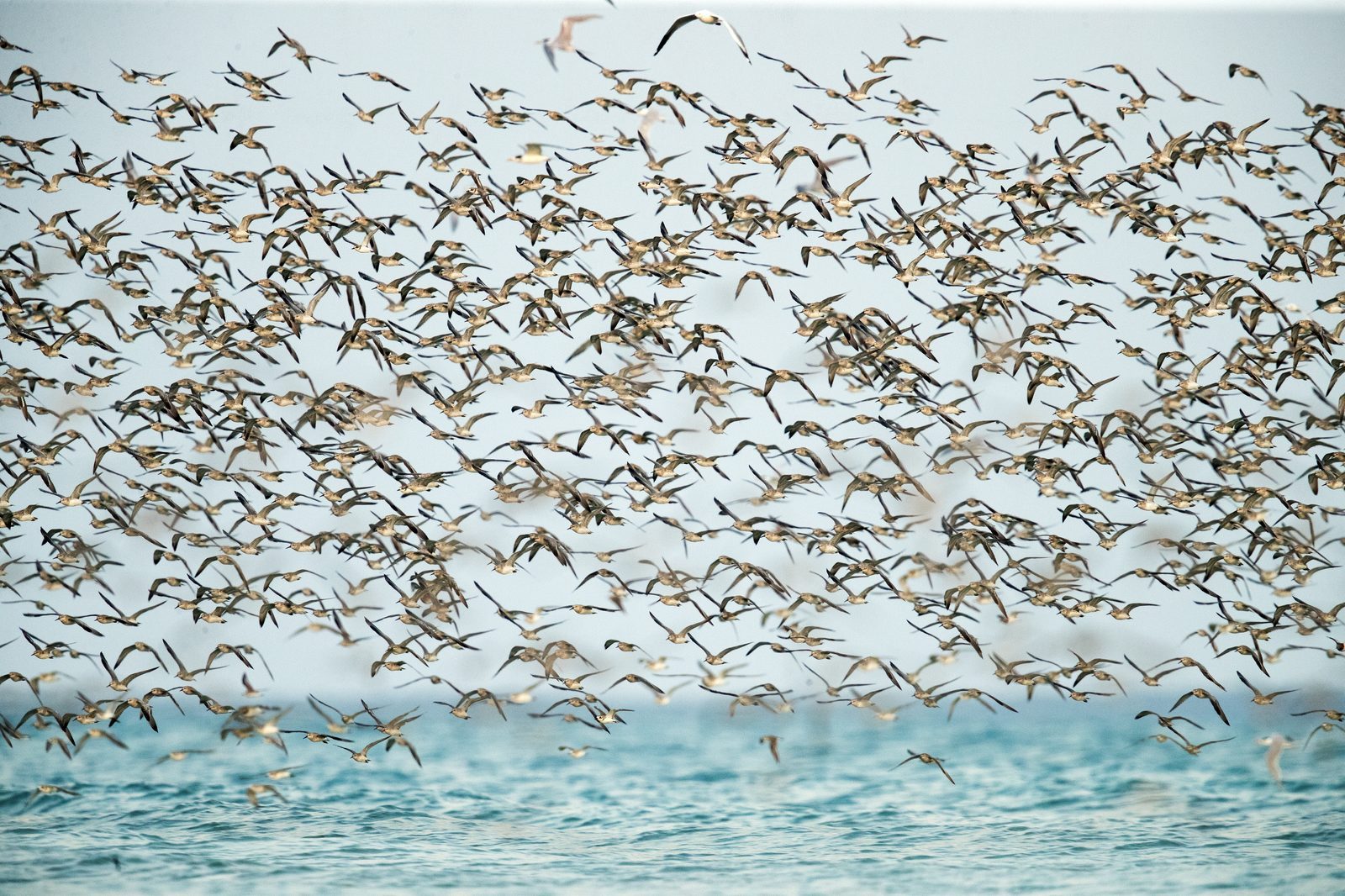
One journey.
Yours.
There are no fixed levels, no standardised curriculum, no cohort moving in lockstep. You work at your own pace. Your pathway begins with a Gazza interview and develops with every field visit and every return conversation with your mentor.
This program grew out of work that began at the waterline in 1975, when Borys Daniljchenko helped establish Queensland's first purpose-built field study centre at Jacobs Well — the same bay, fifty years later, the same birds.
Ecological literacy.
Learning to read a place.
The goal of this program is not to produce people who know facts about shorebirds. It is to produce people who can read Moreton Bay — who can stand at a roost site at high tide and understand what they are seeing, why it matters, and how to make it matter to someone standing next to them.
"Knowing, caring, and practical competence together can be regarded as the basis of ecological literacy."David W. Orr · Ecological Literacy · 1992
"All education is environmental education. By what is included or excluded, students learn that they are a part of or apart from the natural world."David W. Orr · 1990
"Experience outside the school has its geographical aspect, its artistic and literary, its scientific and historical sides. All studies arise from aspects of the one earth and the one life lived upon it."John Dewey · The School and Society · 1915
Orr distinguishes between the resident and the inhabitant. The resident's knowledge is theoretical and abstract — its purpose is control. The inhabitant knows a place the way you know a person — through repeated encounter, through reading its moods and its seasons, through developing a relationship that has a history.
The FSB program trains inhabitants. The classroom is the mudflat. The curriculum is the tide. The assessment is whether you can read what is in front of you — and whether you can help someone else begin to read it too.
This is not a program about shorebirds. It is a program at the waterline — where the science meets the public, and where a single good conversation can shift how someone sees the bay forever.
Three stages.
One continuous path.
No two Stewards travel this path the same way. Gazza interviews you, maps where you are, and develops a lesson plan specific to you. What follows is a description of the territory — not a timetable.
Learning the language of the site. Every mudflat has a grammar — tidal state, species composition, behaviour, disturbance signals, seasonal rhythm. A Reader is becoming ecologically literate in the most direct sense: learning to decode what the bay is telling them, visit by visit.
This is an active, serious thing. The Reader shows up at the right tide. They install Shoreline Watch on their phone before they leave home. They watch, they count, they file a record. They begin to notice the difference between a roosting flock that is settled and one that is alert. That noticing is the beginning of field literacy.
The science is clear: the act of attentive engagement with birds — what researchers call psychological flow — produces measurable improvements in wellbeing, sustained long after the encounter. The Reader is not only learning about the bay. They are building a relationship with it that is good for them.
The Interpreter has internalised enough of the science to translate it for a stranger in real time. A dog walker asks what those birds are. The Interpreter doesn't just name them. They connect the person to the moment — to the eleven days of nonstop flight that brought this particular godwit to this particular mudflat, to what the flush they just caused actually costs the bird in March.
This is the amygdala toggle — the moment science becomes story becomes feeling. It is what the Waterline Scripts train for. The Interpreter is the ecological bridge between the research and the public. They are what happens when someone who knows something shares it with someone who is standing right there in front of it.
Researchers find that the act of sharing an encounter with birds — articulating joy, naming what you see, framing it for another person — amplifies the wellbeing benefits for both parties. The Waterline Scripts exist because the story shared at the waterline is not incidental to the program. It is the program.
The Ambassador carries the same knowledge as the Interpreter but has developed something additional — standing. They have a relationship with the site that predates the conversation. They have field records that span seasons. They can sit across a table from a council officer, a land manager, a developer's consultant, and speak not from passion alone but from documented evidence.
"I have been at this site every spring tide since 2026. Here is what I have observed. Here is what the data shows." The Ambassador is what RMTools was designed to support — the ecological bridge between community concern and institutional response. This is where a Steward's field record becomes the argument for protective management at the site level.
Not every Steward will reach Ambassador stage — and that is right. Interpreters do profound work. But the program makes the Ambassador pathway visible from the beginning, so that every Reader can see where the journey leads, and every Interpreter can feel the pull of what comes next.
Gazza doesn't
teach a curriculum.
He reads you.
Gazza is a Bar-tailed Godwit with sixteen Pacific crossings and the AI tutor for this program. He is the only tutor who interviews you before he teaches you — and the only one who updates his assessment of where you are after every conversation.
This is not a gimmick. It is a genuine mentor relationship — one in which the mentor pays attention to the learner, not just the material.
Meet Gazza →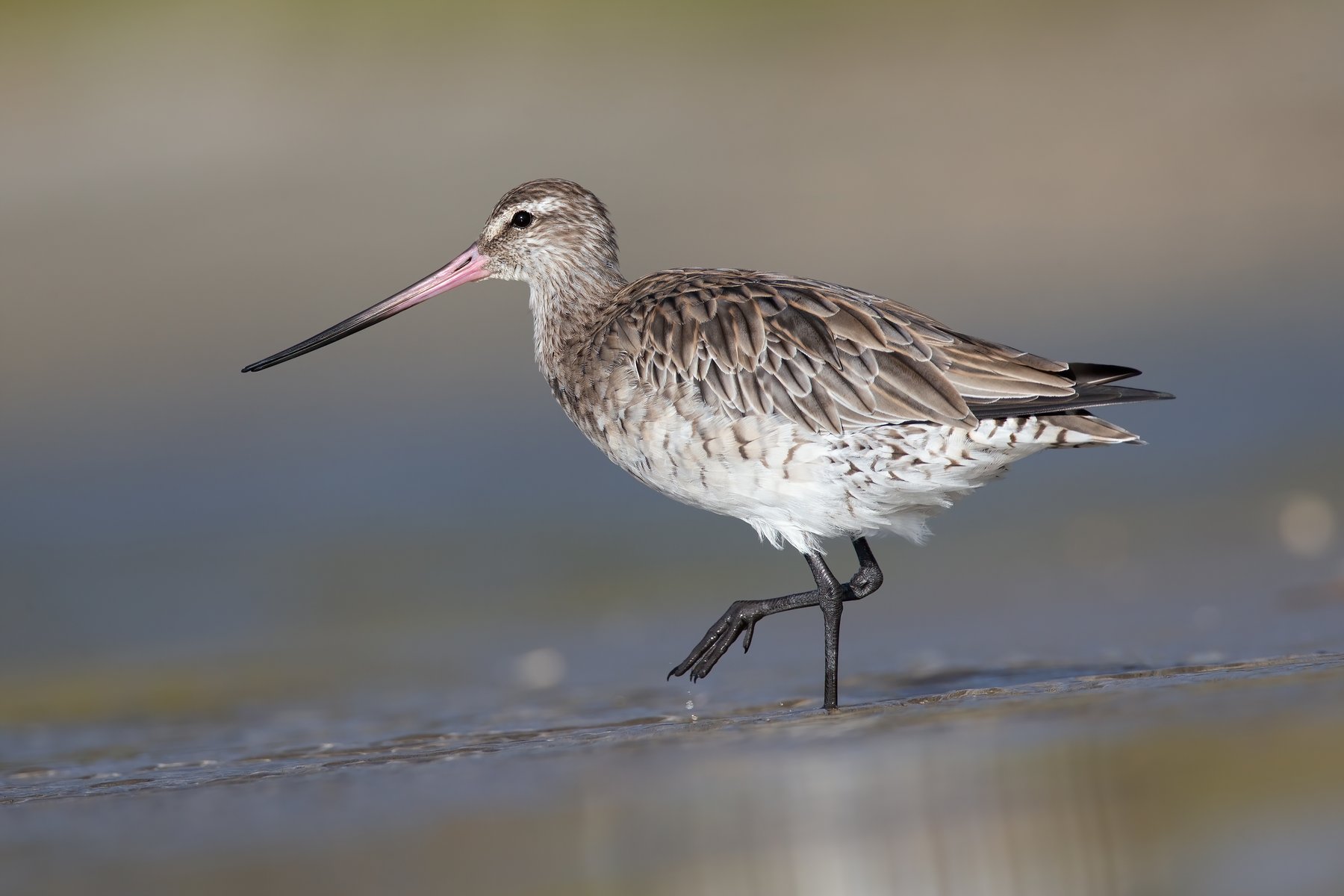
The science of what
the bay gives back.
The research on human–bird relationships is unambiguous. These are not soft claims. They are peer-reviewed, replicated findings from King's College London, the University of Exeter, and BioScience. The bay is good for the birds you protect. It is also good for you.
Everyday encounters with birdlife produce time-lasting improvements in mental wellbeing — in healthy people and in those with diagnosed depression. The effect persists after the encounter ends.
The attentive engagement a roost visit demands produces psychological flow — deep absorption, effortless concentration, a feeling of mastery. This state is associated with peak wellbeing and performance.
The act of sharing an encounter with birds — naming what you see, framing it for another person — amplifies the wellbeing benefits for both parties. The Interpreter role is not altruistic. It is also personally restorative.
"Birdwatching is more effective at increasing wellbeing and reducing stress than going on a nature walk. The joyful group — those who rated their joy at each species rather than simply counting — experienced the most remarkable improvement."Jolanta Burke · RCSI University of Medicine and Health Sciences · The Conversation · 2024
Science to Kin
A progression from data to relationship — from what we know to who we protect. The six steps that underpin every resource in this program.
"We protect what we love. We love our kin. The birds are still waiting, to be recognised, as kin."
Conversations With Birds · Borys Daniljchenko
A$95.
Once. Everything.
First cohort: Late July / August 2026
Jacobs Well Environmental Education Centre · REF Environmental · BIEPA
Field practice and in-person events are delivered through the three delivery partners at Kakadu Beach, The Hub, and Jacobs Well EEC.
The birds are at the waterline.
The program starts with a conversation.
Register your interest for the first cohort — Late July / August 2026 — ahead of the September migratory return.
Not ready for the full program? Become a Shoreline Assessor →